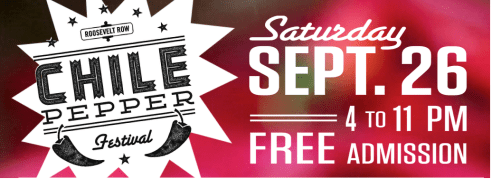
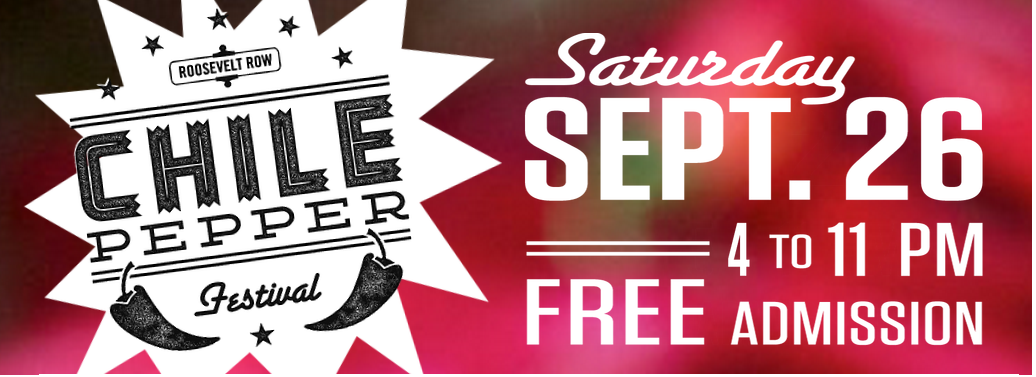
Head on out to Roosevelt Row in downtown Phoenix Saturday September 26th. The Chili Pepper Festival is an event that is centered around food and music. Local chefs and restaurant owners will participate in the Chile Pepper Challenge. Activities include onsite chile roasting, cooking demos, live music, salsa dancing, activities for kids, a talent show hosted by Lawn Gnome Publishing, a Beer Garden presented by Deschutes Brewery AND a gourmet margarita station by 3 Amigos Tequila will all be on the menu! Announcement of the Festival’s best chile pepper dish winners and crowning of the year’s Chile Pepper Champion will culminate the festivities.
All proceeds from the Chile Pepper Festival go towards supporting Roosevelt Row Community Development Corperation, an organization committed to building a vibrant, dense, diverse, walkable and bikeable urban arts district in downtown Phoenix, and to the Roosevelt Growhouse, an urban agriculture and education program where teens and community members work side-by-side to learn the importance of healthy living, while actively building their community together.
The exhibit features interactive elements where kids can explore the functions of your nose, learn about human skin, burps, gas and the digestive system.
Grossology runs until September 7th, 2015. Tickets are $6 (Adults), $5 (Senior and Child) plus general admission. Arizona Science Center members are able to enter for $5 (Adults), $4 (Senior and Child).
Laboratory5 Inc. is a small business based in Tempe, Arizona
This is part three of a three part series on “Music & Productivity” – View Parts One & Part Two Here
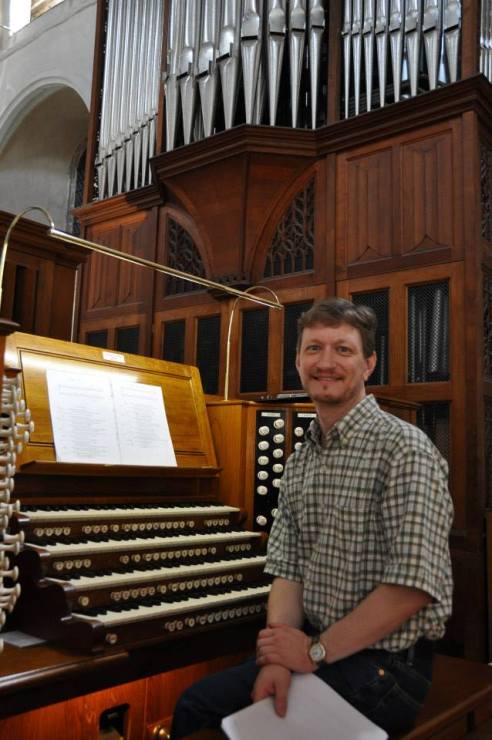
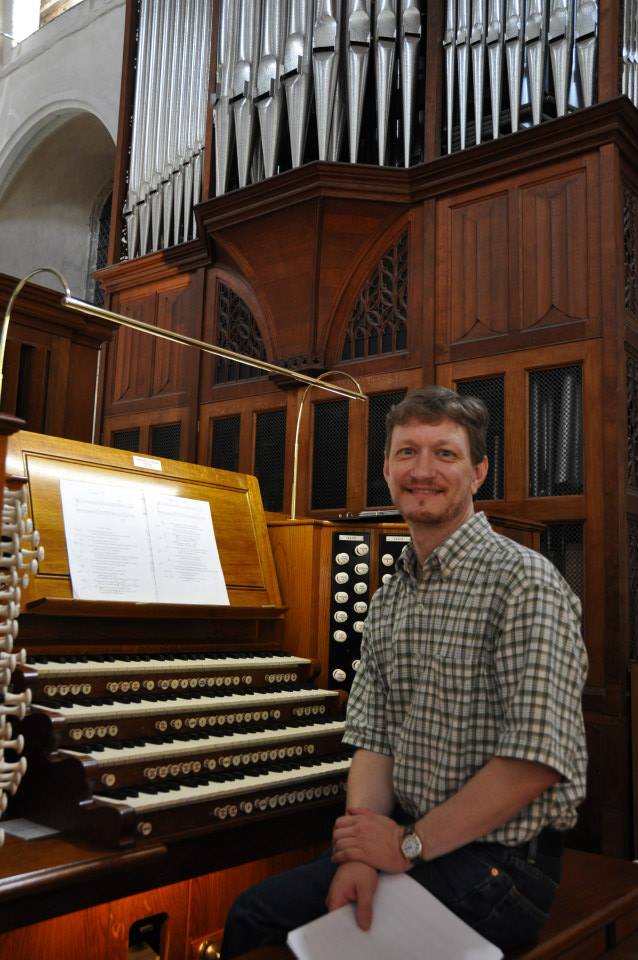
Last week in Part 2 of Music & Productivity, we learned about Joey Salamon, an artist whose work is closely tied to music during its stages of production. This week I was interested in discussing the subject of music and productivity from an expert in the field of music. Dr. James Gerber is the Music Associate at All Saints’ Episcopal Church & Day School in Phoenix, a place that is very well known for its phenomenal music program. I was not disappointed as I found Dr. Gerber to be incredibly insightful on the subject. While listening to music is a wonderful experience, creating music is an amazing experience as well.
Above is “Herbert Howells: Salve Regina” performed by the All Saints’ Episcopal Church Choir
Formal education in music, such as private lessons requires a great deal of discipline. The student must practice on a regular basis and repeat the musical phrases over and over in order to get the perfect sound. As a result, many musicians become intense perfectionists. “Musicians, as part of their practice process are continuing to work at things–they are never satisfied.” Explains Dr. Gerber. Practice becomes a state of being. There is always room for improvement. The skills musicians acquire from their practice can be very beneficial to other parts of his or her life. When applied to other fields of study, “They will be the ones that make the scientific discovery because they don’t give up.” Gerber says.
In addition to discipline, the practice of music can also give us experiences in other skills. “Experience creates competence, which drives confidence, which creates resilience.” Mitzi Montoya, Vice President and Dean of Entrepreneurship & Innovation in Art at ASU said during her talk at the Girls in Tech Catalyst Conference this week in downtown Phoenix. “It is both an emotional process and also an analytical process. In western tradition is both a visual as well as an aural process.” explains Dr. Gerber. You can work through your emotions through music, gain better analytical skills, learn new ways to visualize things and excel in the ability to listen on many levels. Throughout most of history music was passed on through aural tradition. It wasn’t until the medieval period when a system of notation was developed. When you are able to write things down, they begin to take on a whole new level of meaning. Music has enhanced the development of language. “Music can transcend language barriers. It is cross cultural. You can express things through music that you can’t through spoken word.” says Dr. Gerber.
Above “Prelude, Fugue, and Variation by Cesar Franck” James Gerber on the Organ.
Music is also a physical experience, engaging the body. Rhythms found in music are based on the natural rhythms of the body. We usually have a natural physical response to what we hear. Music can make us want to get up and dance, or help us through a long run. It requires physical skills as well. For example, the technique of playing the violin is a physical skill that takes time to develop–how to hold the bow, executing the finger patterns properly on the strings, how the violin is held and how the person playing the violin is sitting or standing is very important. Beyond that, professional musicians are often called to produce music even if they aren’t in the mood. They develop an ability to switch into performance mode. No matter what is going on aside from the music, they learn to brush it aside and focus only on what’s in front of them. These are all great skills that can be used in other areas of life, especially the work environment. Music is a wonderful way to develop them.
Another wonderful experience musicians have is connecting with other people. When they play in a group such as a band, an orchestra, or choir is they become a part of a community. Just like a sports team, the musicians have to work together to create the sound. They listen for each other and work collaboratively through their creation of song.
Above “Tomás Luis de Victoria:Nigra sum sed formosa.” All Saints’ Episcopal Church Chamber Choir
It is clear that whether listened to, studied, practiced or performed, the benefits of music on productivity are great. If you haven’t experienced participating in the creation of music, you may want to consider it. It is a great way to “cross train” your brain.
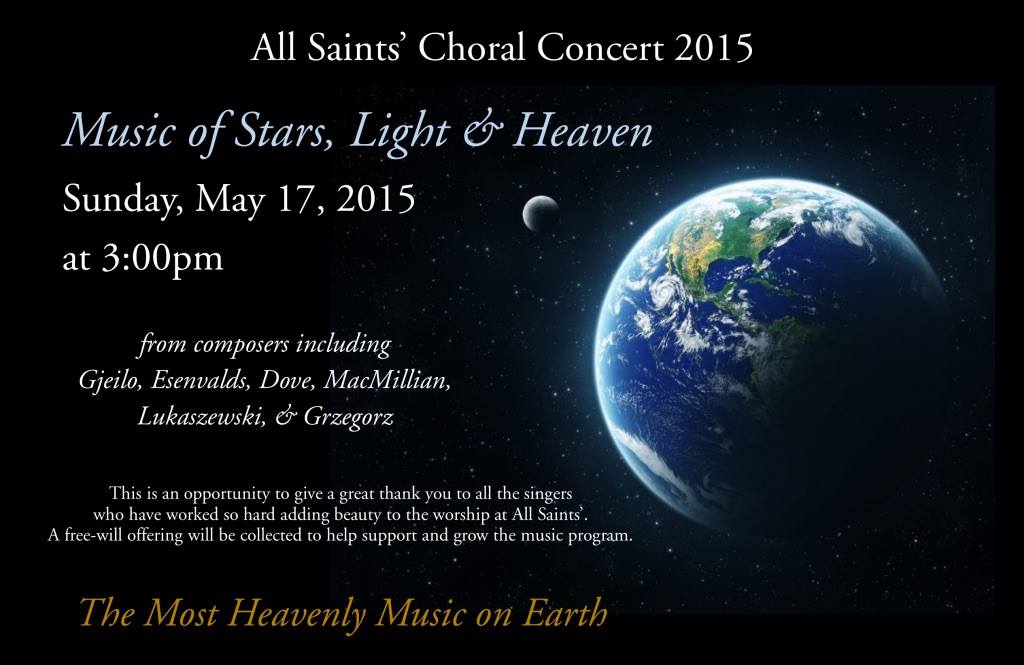
You can check out the All Saints’ Chamber Choir at their concert “Music of Stars, Lights & Heaven” next Sunday, May 17th at 3pm.
Laboratory5 Inc. is a small business based in Tempe, Arizona


 Lab5 BLOG