Five Dollars of Felt, One Elevator Ride, and the People Who Helped Build Laboratory5

Twenty-five years ago, Laboratory5 began as an experiment in making things by hand.

Before the futurist work, before the labs, before the consulting, workshops, research and all of the strange and wonderful places the company would eventually go, there was paper. There was felt. There were die presses, glue, stacks of cards, orders to fill and a house in Tempe slowly turning into a manufacturing operation.

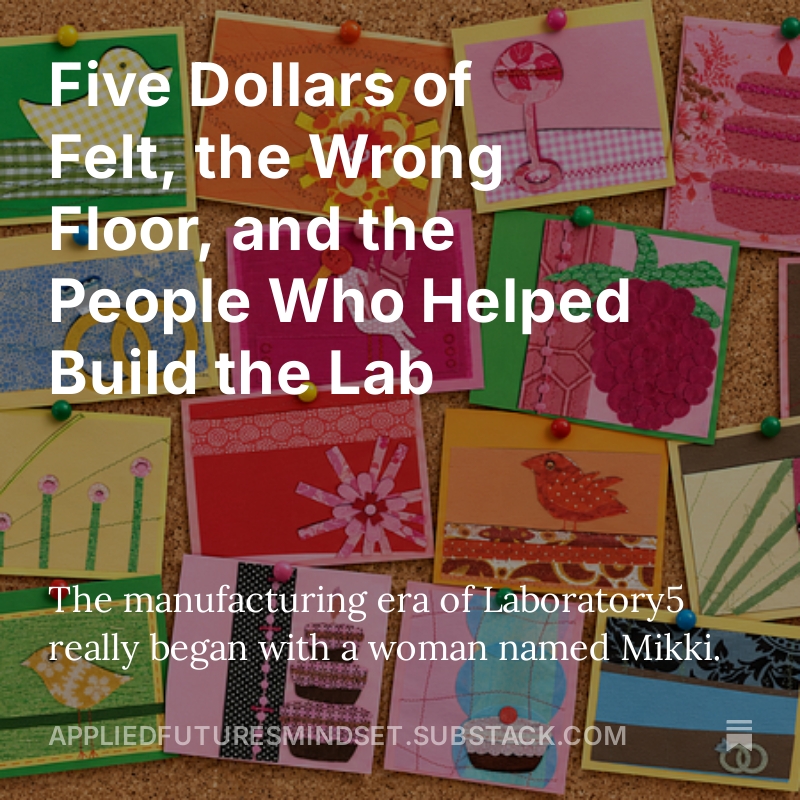
There was also a five-dollar box of craft felt from a flea market that helped define the look of the company.

But when I look back now, that era is not really about the products.

It is about the people.
The Arizona State University board member who asked me about my little-girl dream. The friend who seated me beside exactly the right person at a dinner party. The stationery company owner who invited me to walk the National Stationery Show in New York. The stranger who overheard me telling my husband I was completely out of my league and informed me that I was, quite literally, on the wrong floor.

That elevator ride changed everything.

The next year, Laboratory5 had its own booth at the National Stationery Show. From there came showroom reps, museum stores, independent boutiques, national media, TV appearances, a lot of felt, and eventually an opportunity with Target that forced me to decide what kind of company I actually wanted to build.

This second piece in my Laboratory5 25th anniversary series is about that chapter, but mostly it is about the humans who helped shape it.

It is also about something I understand much better now: sometimes the dream is not supposed to keep getting bigger. Sometimes you get to live it fully, recognize that you did what you came to do, and move on to the next thing.

Read Five Dollars of Felt, the Wrong Floor, and the People Who Helped on Substack

Cyndi Coon is a time traveler and rule-bender, nerding out for good using data, science and curious questions as an Applied Futurist, author, creative, ecosystem builder, facilitator, producer, researcher, storyteller and publisher for: governments, the military, higher education, private partnerships, enterprise, and industry. Cyndi is the Founder and Principal Futurist at Applied Futures Lab, Founder of Laboratory5, and Co-founder of Arizona State University’s Threatcasting Lab and is the co-founder at Threatcasting.ai. Cyndi is the author of Future AI Mindset, co-author of Threatcasting (2021), Futurecasting (2026) and the author of numerous reports, articles and book chapters. Founder and Publisher at Turkey Hill Press.

She is an Affiliate at the Center for Emergency Management & Homeland Security. Chief Media Officer for Content Evolution. She leads the i4j (global innovation for jobs workforce) and Coolabilities communities, promoting inclusive and forward-thinking solutions. She is a Web 3 advisor. Connect with Cyndi Linktree 
Exploring the Possibilities – Building Future Artifacts

I recently spent the day at Northern New Mexico College, surrounded by middle school girls, cardboard, tape, and a whole lot of imagination.

I was invited by the New Mexico Network for Women in Science and Engineering to lead workshops as part of their “Exploring the Possibilities” STEM event. They organize these experiences across the state, and you can feel the impact immediately. The room was full of curiosity before we even started.

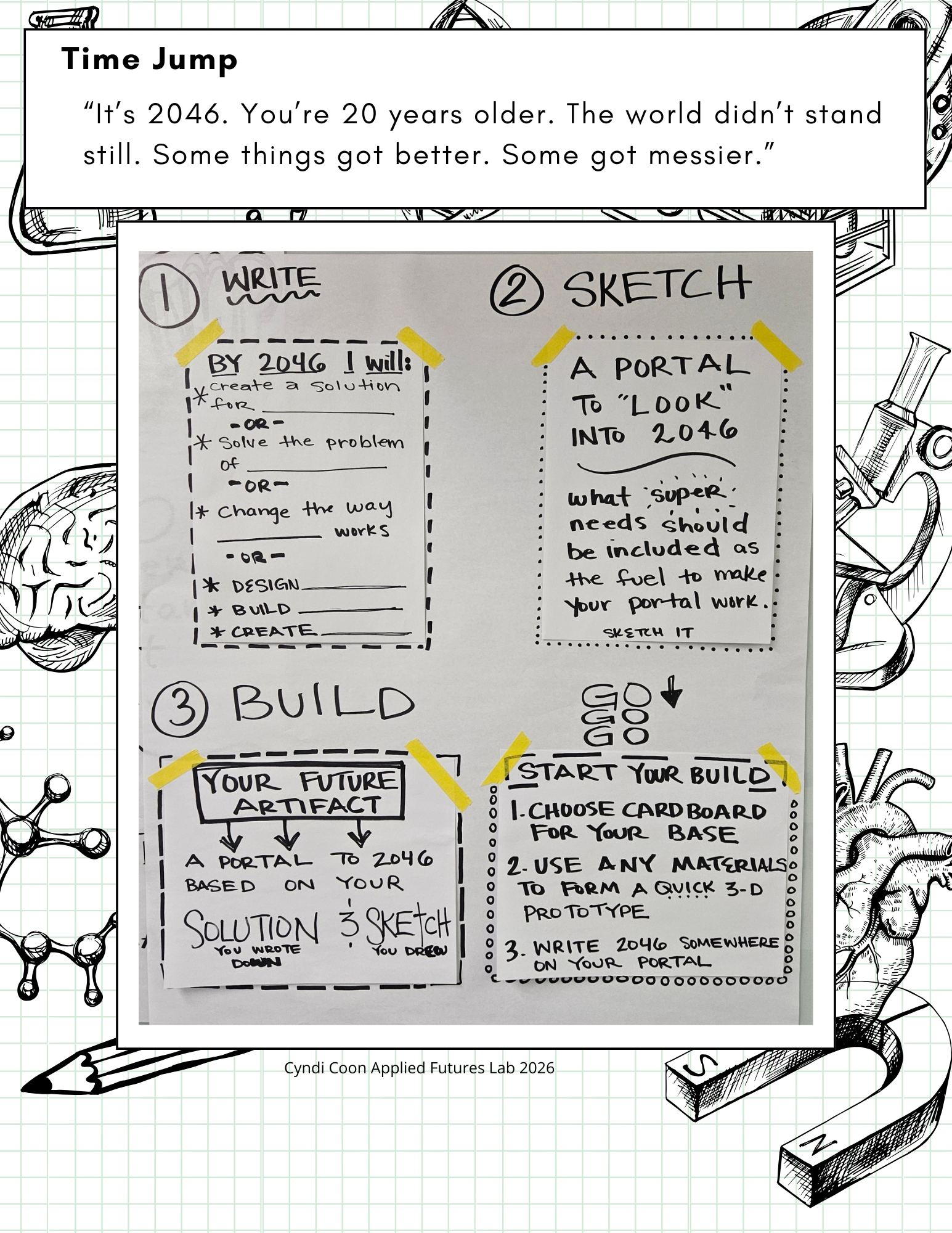
We began with a time jump. It’s 2046. You’re 20 years older. The world didn’t stand still. Some things got better, some got messier.


I asked them to write quickly, no overthinking, about one thing they would fix, solve, or change before then. That shift, from now to later, changed the energy in the room. Suddenly, they weren’t just students. They were decision-makers.

From there, we moved into sketches and then into building. Cardboard bases, tape and glue everywhere, beads, and scraps. It got messy fast, in the best possible way. They built what we called future artifact portals, physical objects from 2046 that solve a problem they care about.

Not ideas floating around, but something you could hold, point to, and explain.

As they worked, the thinking started to surface. Who uses this? When? What does it change? What might it break? Without calling it anything formal, they were working through systems, cause and effect, and the reality that every object carries choices inside it.

What I love about this kind of work is how quickly it becomes real for them. The future stops feeling distant. It becomes something you can shape. You can see it happen in their hands, in the way they test, adjust, and explain their builds to each other.

It was collaborative and full of energy. The kind of learning that doesn’t sit still. I got to walk them through what being a futurist looks like in practice: not guessing, but making. Prototypes, sketches, artifacts. Evidence of ideas. It was so fun. There’s something powerful about stepping away from screens and building in the physical world. You can watch thinking happen in real time. You can see confidence grow as something takes shape.

I’m grateful to the New Mexico Network for Women in Science and Engineering for the invitation and for the work they’re doing across New Mexico. Experiences like this matter.

Why We Choose the Bear: An Exploration of Strength, Safety, and Symbolism

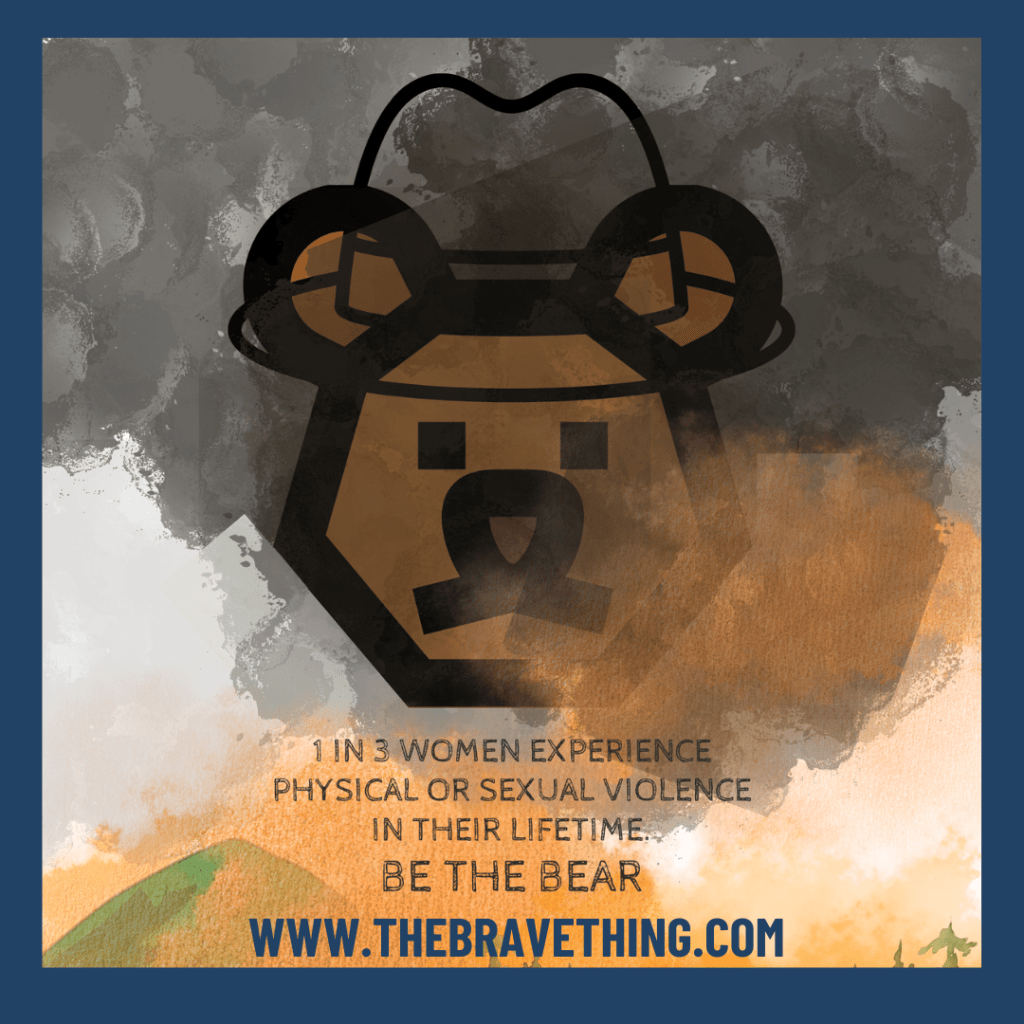
When danger can appear in the most unexpected places, the question of where and how we find safety becomes deeply personal, touching on our fears, strengths, and shared experiences. We Choose The Bear, a new anthology I have co-written with Kim Larkin, invites readers to explore these themes through a powerful collection of stories, essays, poems, and artworks that challenge traditional ideas about power and protection.

BUY We Choose The Bear

At first glance, the title may evoke images of wild, untamed nature—perhaps a fierce bear stalking through the forest. But this anthology flips the script, using the bear as a symbol of safety rather than fear. The inspiration behind the book is rooted in a provocative and poignant question: Why do many women and marginalized individuals feel safer encountering a bear in the woods than a man? This question isn’t just rhetorical; it’s a lens through which the authors examine the complex dynamics of violence, trust, and survival.

Byte-Sized Book Banter Curious Questions Considered Podcast with Iris and Axil. Episode on “We Choose The Bear” book.

We Choose The Bear was created during significant celestial events in 2024, a year marked by both cosmic and cultural shifts. The anthology captures this moment in time, weaving together personal narratives, mythological themes, and cultural insights to form a rich tapestry of experiences. Each piece in the collection adds a unique thread, offering readers a diverse array of perspectives on what it means to find strength in vulnerability, to reclaim power in the face of oppression, and to redefine safety on one’s own terms.

The bear, traditionally seen as a symbol of raw, untamed power, becomes in this anthology a protector. The contributors explore this symbolism through various lenses—some stories draw from ancient myths, where bears were revered as sacred protectors; others offer contemporary narratives that reflect the lived experiences of women today, navigating a world that can often feel hostile and unpredictable.

But We Choose The Bear is more than just a collection of stories; it’s a call to action. The anthology doesn’t shy away from the harsh realities of violence and fear, but it also doesn’t leave the reader in despair. Instead, it offers a path forward, one that is rooted in solidarity, resilience, and the power of reclaiming one’s own narrative. It’s a book that speaks to the heart of what it means to be human—vulnerable yet strong, fearful yet courageous.

As you turn the pages of We Choose The Bear, you’ll find yourself drawn into a world where the boundaries between myth and reality blur, where the woods offers not just danger, but also refuge. The stories and essays will challenge you to think differently about power and protection, while the poems and artworks will leave a lasting impression, inviting you to reflect on your own experiences and beliefs.

Whether you are a seasoned reader of feminist literature, someone seeking to understand the complexities of violence and safety, a fan of art or simply a lover of thought-provoking stories, We Choose The Bear has something to offer. It’s a book that stays with you, sparking conversations and inspiring action long after you’ve finished reading.

In the end, We Choose The Bear asks us all to consider where we find our strength and how we can create a safer, more equitable world. It’s a question that resonates deeply in today’s society, and one that this anthology answers with both honesty and hope.

We Choose The Bear is available now online. Don’t miss your chance to experience this powerful and timely collection. Read it, share it, and join the conversation.

BUY We Choose The Bear

BUY We Choose The Bear