The Human Experience of Artemis II

There’s something electric about this moment.

I’ve always been a space nerd. I love everything about it. These ten days feel like an invitation to lean all the way in, to follow closely, to let myself get pulled into the details. As Artemis II rounds the moon, it somehow feels like we’re all up there with them. Not just watching, but experiencing it in real time.
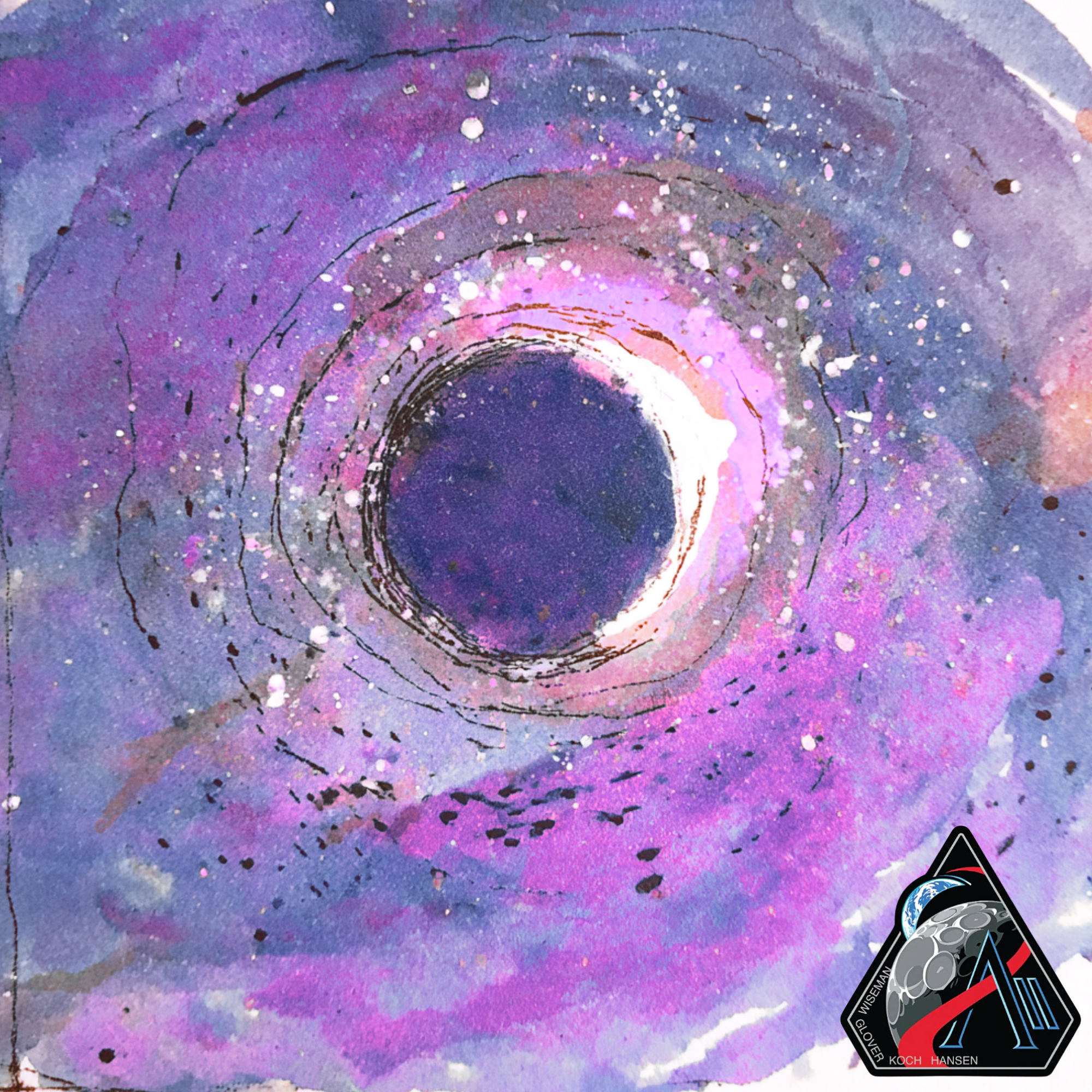
Image by Cyndi Coon

One of the first details that stopped me was learning that the astronauts were trained in photography. You can feel it in the images coming back. They’re paying attention to light, to shadow, to the curve of Earth rising in a frame. These aren’t quick snapshots. They carry intention. You can sense a human behind the lens, aware that what they’re seeing is rare and worth shaping.

Back on Earth, Mission Control adds another layer. The livestream voices move with a kind of poetic flow alongside what we’re seeing, and it shifts how the moment lands. When something is that expansive, language stretches. People reach for rhythm, for metaphor, for something that can hold awe without flattening it. It doesn’t feel forced. It feels like a natural response to what’s unfolding.

Music has quietly become part of the experience too. Every morning, the astronauts are woken up with a song. There’s something intimate about that, this daily ritual carried into space. And back here on Earth, people have started tracking those songs, sharing the NASA-provided playlist built by the astronauts before launch. It creates a thread between worlds. You can press play and, for a moment, sync your day with theirs. Same music, different gravity.

There’s also something deeply personal woven into the mission. A crater on the moon named after an astronaut’s wife who passed away. What a beautiful thing to bring memory into orbit. It reminds you that even at this scale, everything is still anchored in human lives, human relationships, human loss and love. Moments like that have a way of reframing everything else around them. It settles in, and suddenly the whole mission feels different.

Sitting with all of this, it’s hard not to notice what it says about where we’re headed. For a long time, there’s been this quiet assumption that the future belongs to code, to systems, to efficiency. That as technology advances, the expressive, human parts of us somehow matter less. But here we are, sending humans around the moon, and what we choose to carry alongside the science are cameras, playlists, stories, names that hold memory, and people on the ground who know how to hold attention.

The arts have always been how we make sense of things that are too big to hold all at once. That could be grief after losing someone, or the feeling of looking back at Earth from space. In both cases, the scale is overwhelming in its own way. We write, we create, we compose, we frame. These are the ways we take something vast and turn it into something we can live with. Science makes it possible to reach those moments. The humanities give us a way to understand them, to sit with them, to shape them into meaning, and to share that meaning with others.

What’s unfolding with Artemis II makes it clear that those human layers aren’t fading as our tools get more advanced. If anything, they’re becoming more intentional. The photography isn’t incidental. The music isn’t filler. The storytelling isn’t an add-on. Each of these elements is part of how the mission is being experienced and remembered. A photograph taken in orbit becomes a cultural artifact. A song played at wake-up becomes a shared ritual across millions of people. A poetic line becomes part of how we hold this moment over time.

There’s a quiet recognition in that. Getting somewhere isn’t enough. We want to feel it. We want to share it. We want to remember it. We want to make meaning from it together. The more complex the technology becomes, the more care we seem to be putting into shaping the experience for humans. This is the work of the humanities, not as decoration, but as something foundational.

And there’s something else in this that matters. We are not just building missions anymore. We are building experiences that people can enter from wherever they are. The livestreams, shaped by voices that understand performance, create a sense of presence. The images, composed with care, invite us to linger a little longer. The music lets us align our daily rhythms with people moving through space. It becomes participatory in a way that feels deeply human.

That shift matters more than we might realize. When the future is something that only happens at a distance, it’s easy to ignore. But when it becomes something you can feel, something you can step into even briefly, it becomes part of your lived experience. And that changes your relationship to it.

Right now, as Artemis II moves through space, there’s a kind of rehearsal happening. Not just for future missions, but for how we show up to the moments that define us. We are practicing attention. We are practicing shared awe. We are practicing how to carry our stories, our art, our music, and our memories with us as we go further than we’ve ever gone before.

And in that, there’s a quiet clarity. Our future is being shaped not only by what we build, but by how deeply we stay connected to what makes us human.
Exploring the Possibilities – Building Future Artifacts

I recently spent the day at Northern New Mexico College, surrounded by middle school girls, cardboard, tape, and a whole lot of imagination.

I was invited by the New Mexico Network for Women in Science and Engineering to lead workshops as part of their “Exploring the Possibilities” STEM event. They organize these experiences across the state, and you can feel the impact immediately. The room was full of curiosity before we even started.

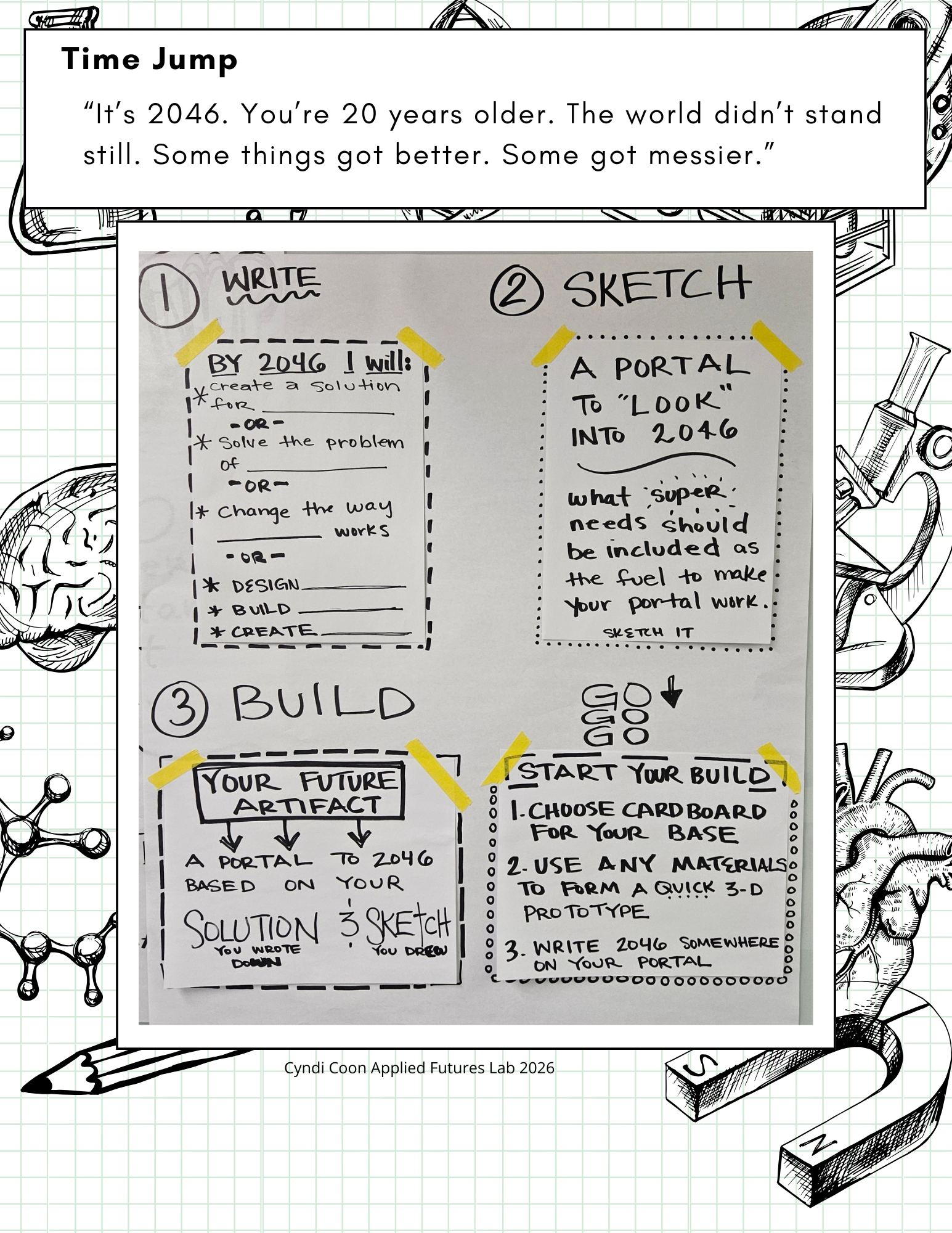
We began with a time jump. It’s 2046. You’re 20 years older. The world didn’t stand still. Some things got better, some got messier.


I asked them to write quickly, no overthinking, about one thing they would fix, solve, or change before then. That shift, from now to later, changed the energy in the room. Suddenly, they weren’t just students. They were decision-makers.

From there, we moved into sketches and then into building. Cardboard bases, tape and glue everywhere, beads, and scraps. It got messy fast, in the best possible way. They built what we called future artifact portals, physical objects from 2046 that solve a problem they care about.

Not ideas floating around, but something you could hold, point to, and explain.

As they worked, the thinking started to surface. Who uses this? When? What does it change? What might it break? Without calling it anything formal, they were working through systems, cause and effect, and the reality that every object carries choices inside it.

What I love about this kind of work is how quickly it becomes real for them. The future stops feeling distant. It becomes something you can shape. You can see it happen in their hands, in the way they test, adjust, and explain their builds to each other.

It was collaborative and full of energy. The kind of learning that doesn’t sit still. I got to walk them through what being a futurist looks like in practice: not guessing, but making. Prototypes, sketches, artifacts. Evidence of ideas. It was so fun. There’s something powerful about stepping away from screens and building in the physical world. You can watch thinking happen in real time. You can see confidence grow as something takes shape.

I’m grateful to the New Mexico Network for Women in Science and Engineering for the invitation and for the work they’re doing across New Mexico. Experiences like this matter.

Practicing the Future AI Mindset Together

The discussion is loud, fast, and often technical. New tools appear every week. Headlines promise transformation, disruption, automation, acceleration.

But the deeper work is quieter.

It lives in how we think.

Over the past few years, I’ve been studying how people interact with intelligent systems. The same technology lands in different hands and produces completely different outcomes. Some people feel overwhelmed. Others find creative momentum. Some freeze. Others experiment.

The difference is rarely technical skill.

It’s mindset.

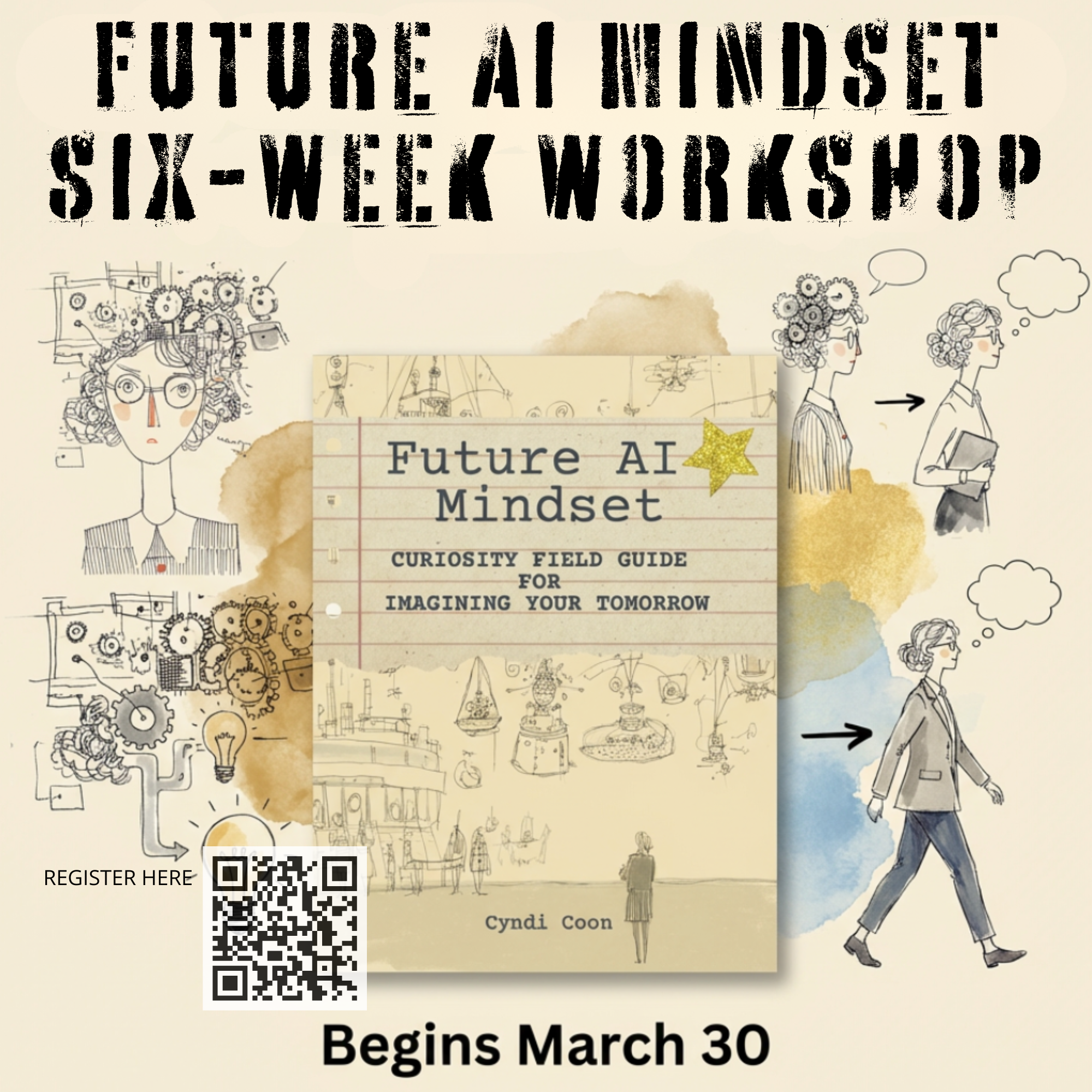
That realization became the foundation for my new book, The Future AI Mindset: Curiosity Field Guide for Imagining Your Tomorrow. The book explores the cognitive habits that allow people to navigate complex, learning systems without becoming reactive or overwhelmed.

But something became clear while I was writing it.

Reading about a mindset is helpful.

Practicing it together is transformative.

That’s how the Future AI Mindset six-week workshop came to life.

Why This Workshop Exists

If you’ve been paying attention to the conversation around AI, you’ve probably noticed something strange.

Artificial intelligence is often described as a technological shift. In reality, it is also reshaping how we think, decide, collaborate, and imagine consequences across time.

When systems can generate ideas, synthesize information, and participate in creative processes, our relationship with knowledge changes. Our relationship with uncertainty changes. Even our relationship with time shifts.

The challenge is not simply learning new tools.

The challenge is learning how to think clearly inside systems that keep evolving.

The Future AI Mindset workshop was designed to address that challenge. It translates the ideas from the book into a structured thinking practice.

This approach is grounded in my work as an applied futurist and in the foresight methods I helped co-create over the years: Threatcasting, Futurecasting, and Applied Experiential Futures. These methods were developed in environments where imagination must be disciplined and decisions carry real consequences.

Enterprise strategy. Government planning. Defense scenarios. Higher education. Innovation labs.

The goal in those environments is not prediction. It is orientation. Helping people think clearly in the presence of uncertainty.

The workshop brings that same discipline into our relationship with AI.

What We Explore Together

The six-week program is designed as a live thinking lab.

Each week we explore a different dimension of the Future AI Mindset framework, combining discussion, reflection, and practical exercises drawn directly from the book.

Participants will examine questions such as:

How does AI reshape cognition and creativity?
What does collaboration look like when some collaborators are intelligent systems?
How do we maintain judgment when machines produce convincing outputs?
How do we think across time when technological change accelerates?

Instead of rushing toward answers, we practice structured curiosity.

We explore scenarios. We examine assumptions. We learn to hold multiple possible futures at once without collapsing into certainty.

These are skills futures thinkers have practiced for decades, and they are becoming increasingly valuable in AI-integrated environments.

What You Will Build

By the end of the six weeks, participants leave with more than notes or ideas. They will have built a set of practical tools they can continue using.

These include:

A personal Future AI Mindset statement that clarifies how you want to engage with intelligent systems.

An Applied Futures Map that connects present decisions with longer-term possibilities.

A backcasting pathway, working from a future you want toward actions you can take today.

A decision anchor that helps guide choices in moments of uncertainty.

And perhaps most important, a personal thinking practice that can travel with you into your work, teams, and projects.

These artifacts are designed to remain useful long after the workshop ends.

Who This Is For

This workshop is designed for people who sense that AI is not just changing technology. It is changing the terrain we think and act within.

Leaders making strategic decisions without complete information.

Educators preparing students for futures we cannot fully describe yet.

Researchers, designers, and builders working inside emerging systems.

Curious professionals who want to remain intentional rather than reactive.

If you have ever felt the acceleration and thought, I need to be thoughtful about how I navigate this moment, you are exactly the kind of person this workshop was designed for.

The Structure

The program runs for six weeks and meets live once a week.

Start date: March 30, 2026
Session length: One hour each week
Format: Live virtual sessions with recordings available

Sessions meet Mondays at:

2 PM Pacific
3 PM Mountain
4 PM Central
5 PM Eastern
22:00 GMT

Between sessions, there will be small exercises designed to help integrate the ideas into everyday thinking.

Nothing overwhelming. Just enough to move from theory into practice.

A Different Kind of AI Conversation

Many AI conversations focus on capability.

This workshop focuses on orientation.

How we think.
How we decide.
How we imagine consequences across time.

The tools will keep evolving. That part is inevitable.

But the mindset we bring to those tools will shape how we use them, how we design with them, and how we guide the systems we are building.

The Future AI Mindset workshop is an invitation to practice that way of thinking together.

Six weeks of thoughtful exploration.
Six weeks of strengthening cognitive habits for an intelligent age.

If that sounds like a useful experiment, I’d be glad to have you join us.

Workshop registration is available HERE


And if someone comes to mind who might enjoy spending an hour a week thinking about the future together, feel free to share it with them.

The future is not something we simply wait for.

It is something we learn to think into.


Cyndi Coon is a time traveler and rule-bender, nerding out for good using data, science and curious questions as an Applied Futurist, author, creative, ecosystem builder, facilitator, producer, researcher, storyteller and publisher for: governments, the military, higher education, private partnerships, enterprise, and industry. Cyndi is the Founder and Principal Futurist at Applied Futures Lab, Founder of Laboratory5, and Co-founder of Arizona State University’s Threatcasting Lab and is the co-founder at Threatcasting.ai. Cyndi is the author of Future AI Mindset, co-author of Threatcasting (2021), Futurecasting (2026) and the author of numerous reports, articles and book chapters. Founder and Publisher at Turkey Hill Press.

She is an Affiliate at the Center for Emergency Management & Homeland Security. Chief Media Officer for Content Evolution. She leads the i4j (global innovation for jobs workforce) and Coolabilities communities, promoting inclusive and forward-thinking solutions. She is a Web 3 advisor. Connect with Cyndi Linktree