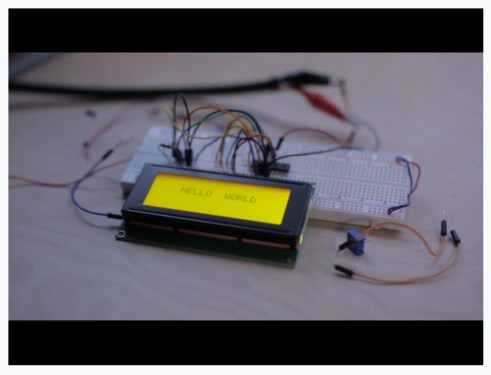
Jump on board this exciting new technology! The Cubit is a small device that allows you to create anything without the intricate skills of an engineer. This allows creative minds to focus on their ideas, rather than all of the technical details. There is still time to back the Kickstarter campaign and be one of the first people to receive this product. It will be interesting to see what creatives all over the world are able to come up with using the Cubit.
I met Tess Posner at the Girls In TechCatalyst conference in downtown Phoenix. Tess is the Managing Director of Samaschool, a social venture that connects low-income people with tools and opportunities to advance their careers in a digital economy through affordable educational programs. Samaschool, a member of a larger organization called Samagroup was launched in 2013 has since grown to provide programs across the United States as well as Kenya. Their dreams are highly motivated, with a goal of expanding worldwide to see 25,000 students graduate from their programs within the next couple of years. From what they have accomplished so far in a short span of two years, I have no doubts that they will accomplish this.
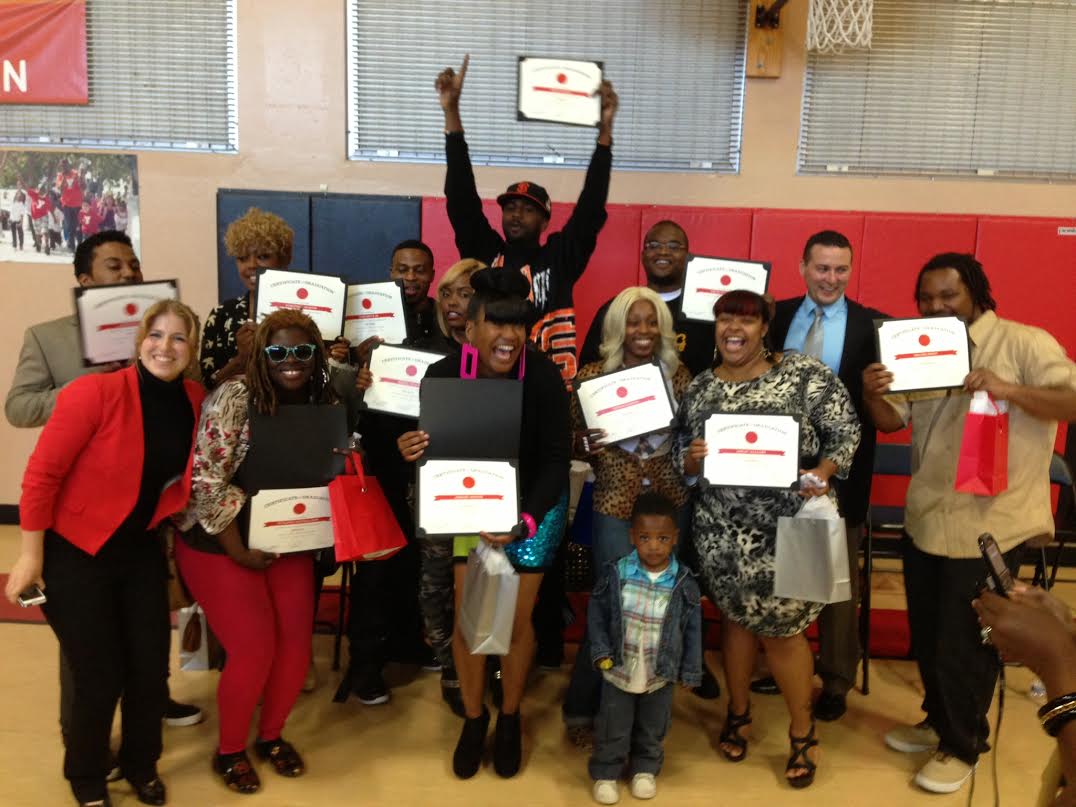
Tess with the very first graduates of Samaschool in San Fransisco.
Samaschool saw one of the leading problems ailing the global economy and identified it as a demand in the market. There is a gap between skills and abilities learned through established educational institutions and those required to get entry-level jobs. Many jobs require the ability to have access to and use a computer just to apply for them. Beyond this, learning basic skills in technology opens up a wide variety of opportunities for employment. The success of Samaschool has come with their abilities to meet this demand. But seeing a problem, and having inspiration does not necessarily guarantee success. For Tess, the driving force behind her venture, it is more personal than that.
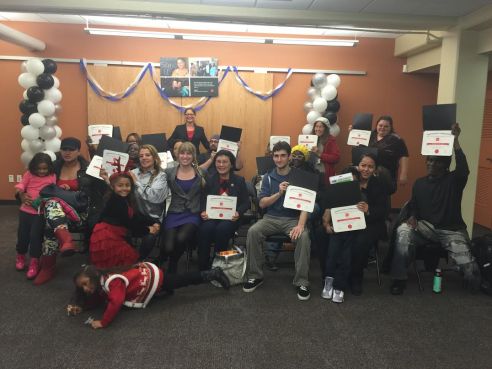
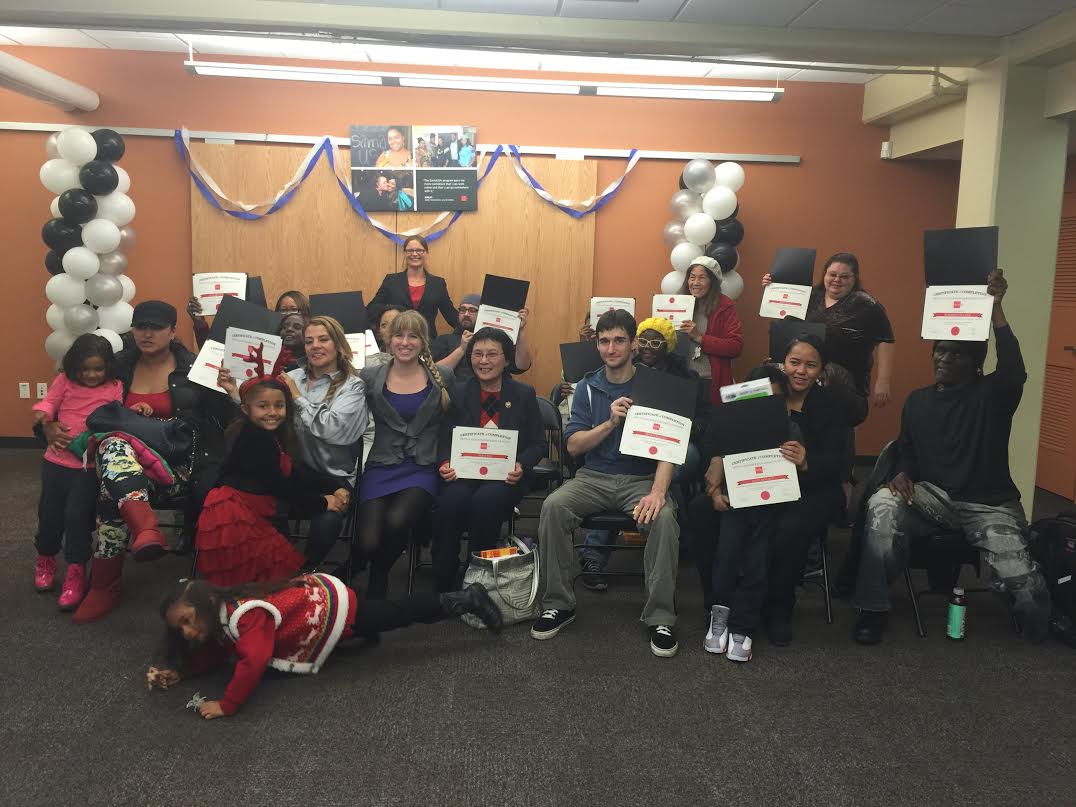
The most recent graduating class of Samaschool in San Fransisco.
When Tess was a teenager, she joined a Habitat for Humanity project and traveled to El Salvador to provide aide to those in need. This experience was life changing. What she saw was a lot of talented people living in poverty who did not have opportunities to harness their skills. She realized that opportunity was not distributed equally, though talent was. Tess herself, grew up in a low-income household, but she had the opportunity to go to college. She decided that her goal in life was to make sure that other people have the same opportunities. Her first course of action was to step into the shoes of those she wanted to help. Tess joined the Americorps Vista Program where she took a vow of poverty and moved to New York City. With only $10,000 in her pocket, she settled in Queens and began working with the New York City School District to teach students about competitive debate–a tool that can come in handy when entering the workforce. Through her experience she was drawn to the idea of helping people find their voice. “It was amazing to watch these kids compete with wealthier schools.” Tess said. She enjoyed tapping into her student’s potential. “Once you give them the resources, they can find it themselves.” Then Tess thought, “How do we make significant change that is scalable?”
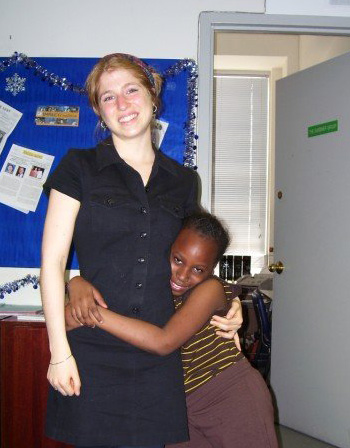
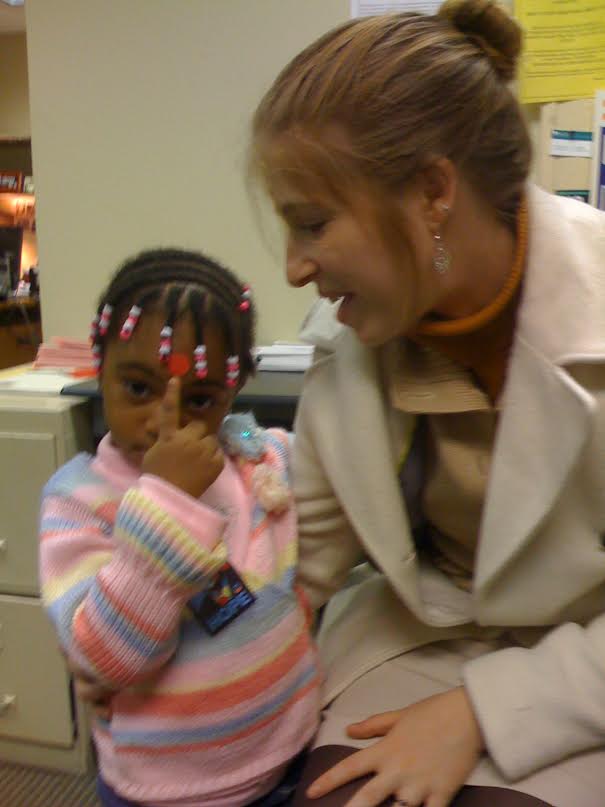
Tess with one of her students in New York City.
So Tess went to school for social work. She chose to focus on social enterprise management. “How do you take business perspectives and apply them to a social impact space?” she wondered. Tess continued to do her work in New York City for a few more years and eventually she moved to San Francisco, California where she got a job managing an education program for foster youth. It was there that Tess discover an astounding statistic. 65% of youth who exit from the foster care program in California end up homeless. What Tess saw was young people who were resilient and talented, yet up against incredible challenges. Tess was introduced to Samasource, a program that helps low-income women and youth in developing countries. They were looking to start a new program in the U.S. and Tess was just the right person for the job. The timing was great, because Tess was very interested in applying technology to everything she had learned.
Tess realized that we are now in an “on demand” economy. This type of economy requires successful people to be entrepreneurial and invested in their own learning. This is the vision behind Samaschool. Samaschool partners with
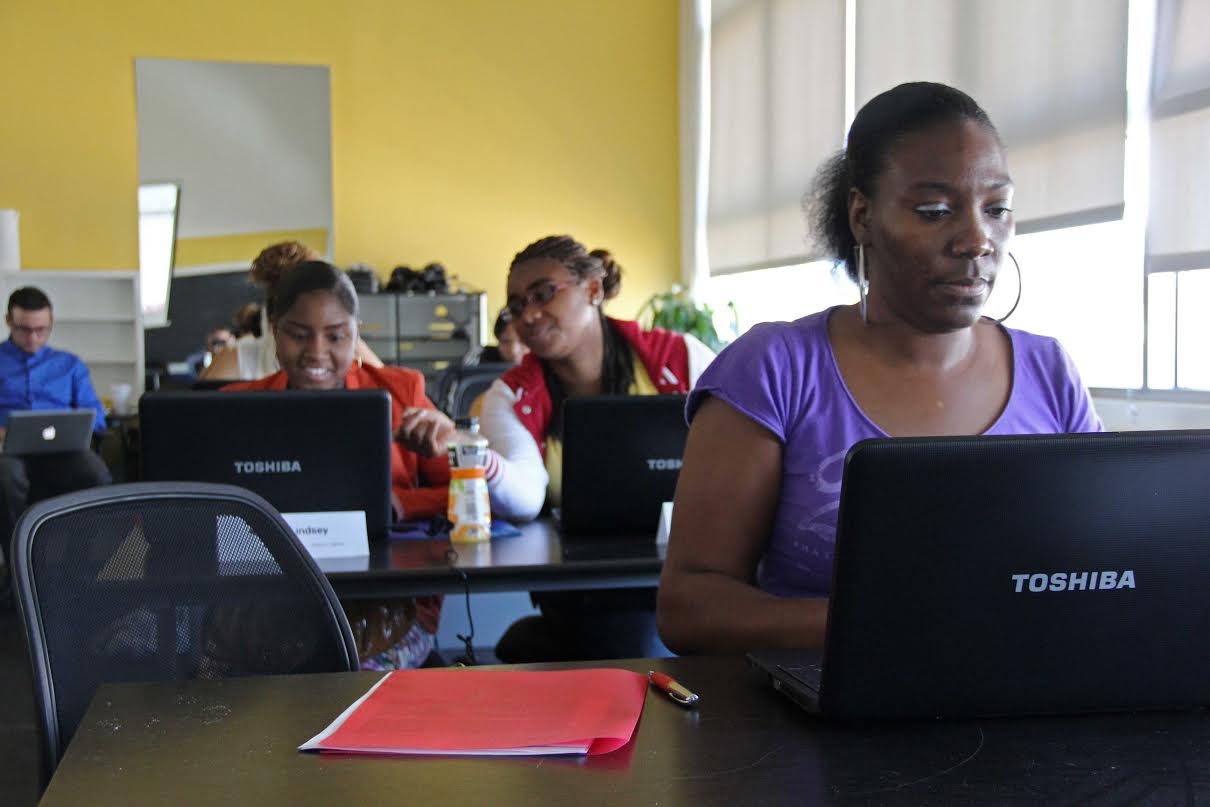
local community colleges and other organizations to find computer labs that can be used as classrooms. Samaschool provides both online courses, as well as classes in person. When the students have completed their courses, they have a graduation day. Recent graduations at Samaschool have moved from a traditional graduation setting to a “Pitch Day” celebration where students present business pitches.
As Samaschool continues to grow worldwide, it will be neat to see how the programs create a positive influence in the students lives, how it effects communities and the impact it will have on the global economy.
Laboratory5 Inc. is a small business based in Tempe, Arizona
This is part three of a three part series on “Music & Productivity” – View Parts One & Part Two Here
Last week in Part 2 of Music & Productivity, we learned about Joey Salamon, an artist whose work is closely tied to music during its stages of production. This week I was interested in discussing the subject of music and productivity from an expert in the field of music. Dr. James Gerber is the Music Associate at All Saints’ Episcopal Church & Day School in Phoenix, a place that is very well known for its phenomenal music program. I was not disappointed as I found Dr. Gerber to be incredibly insightful on the subject. While listening to music is a wonderful experience, creating music is an amazing experience as well.
Above is “Herbert Howells: Salve Regina” performed by the All Saints’ Episcopal Church Choir
Formal education in music, such as private lessons requires a great deal of discipline. The student must practice on a regular basis and repeat the musical phrases over and over in order to get the perfect sound. As a result, many musicians become intense perfectionists. “Musicians, as part of their practice process are continuing to work at things–they are never satisfied.” Explains Dr. Gerber. Practice becomes a state of being. There is always room for improvement. The skills musicians acquire from their practice can be very beneficial to other parts of his or her life. When applied to other fields of study, “They will be the ones that make the scientific discovery because they don’t give up.” Gerber says.
In addition to discipline, the practice of music can also give us experiences in other skills. “Experience creates competence, which drives confidence, which creates resilience.” Mitzi Montoya, Vice President and Dean of Entrepreneurship & Innovation in Art at ASU said during her talk at the Girls in Tech Catalyst Conference this week in downtown Phoenix. “It is both an emotional process and also an analytical process. In western tradition is both a visual as well as an aural process.” explains Dr. Gerber. You can work through your emotions through music, gain better analytical skills, learn new ways to visualize things and excel in the ability to listen on many levels. Throughout most of history music was passed on through aural tradition. It wasn’t until the medieval period when a system of notation was developed. When you are able to write things down, they begin to take on a whole new level of meaning. Music has enhanced the development of language. “Music can transcend language barriers. It is cross cultural. You can express things through music that you can’t through spoken word.” says Dr. Gerber.
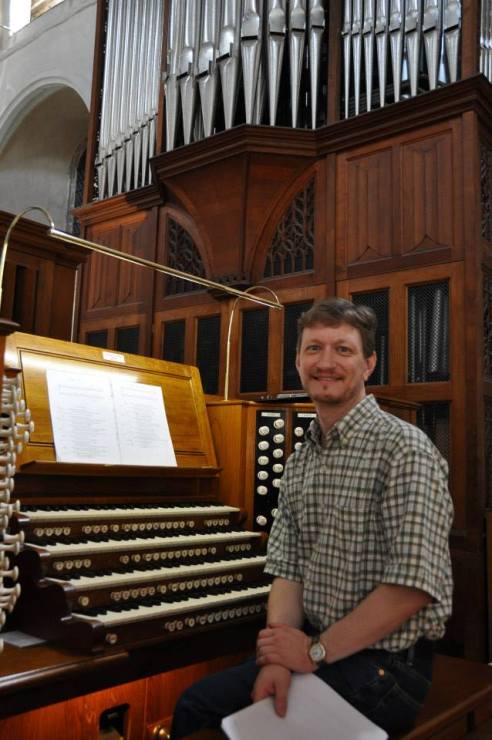
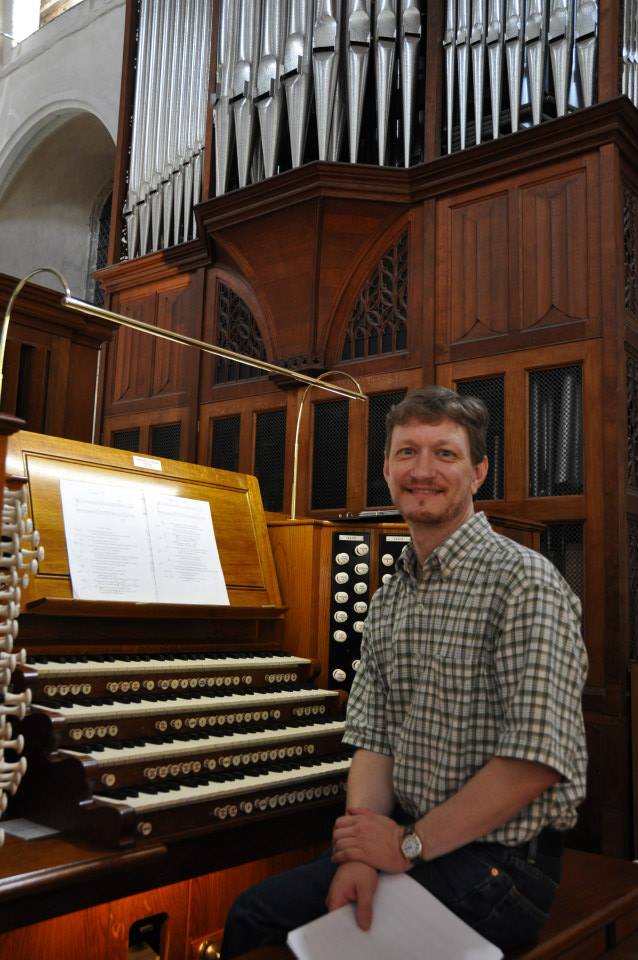
Above “Prelude, Fugue, and Variation by Cesar Franck” James Gerber on the Organ.
Music is also a physical experience, engaging the body. Rhythms found in music are based on the natural rhythms of the body. We usually have a natural physical response to what we hear. Music can make us want to get up and dance, or help us through a long run. It requires physical skills as well. For example, the technique of playing the violin is a physical skill that takes time to develop–how to hold the bow, executing the finger patterns properly on the strings, how the violin is held and how the person playing the violin is sitting or standing is very important. Beyond that, professional musicians are often called to produce music even if they aren’t in the mood. They develop an ability to switch into performance mode. No matter what is going on aside from the music, they learn to brush it aside and focus only on what’s in front of them. These are all great skills that can be used in other areas of life, especially the work environment. Music is a wonderful way to develop them.
Another wonderful experience musicians have is connecting with other people. When they play in a group such as a band, an orchestra, or choir is they become a part of a community. Just like a sports team, the musicians have to work together to create the sound. They listen for each other and work collaboratively through their creation of song.
Above “Tomás Luis de Victoria:Nigra sum sed formosa.” All Saints’ Episcopal Church Chamber Choir
It is clear that whether listened to, studied, practiced or performed, the benefits of music on productivity are great. If you haven’t experienced participating in the creation of music, you may want to consider it. It is a great way to “cross train” your brain.
You can check out the All Saints’ Chamber Choir at their concert “Music of Stars, Lights & Heaven” next Sunday, May 17th at 3pm.
Laboratory5 Inc. is a small business based in Tempe, Arizona


 Lab5 BLOG