For the last ten weeks, I was part of an experience that didn’t look like an experiment at first. It wasn’t framed as disruption or acceleration. It wasn’t about chasing the latest tool. It was a practice lab inside the Mastermind at AI Salon, led by Liz Miller-Gershfeld and Kyle Shannon, and it gathered people who had largely met through our shared work with generative systems.
On paper, this could sound like a story about AI.
It isn’t.
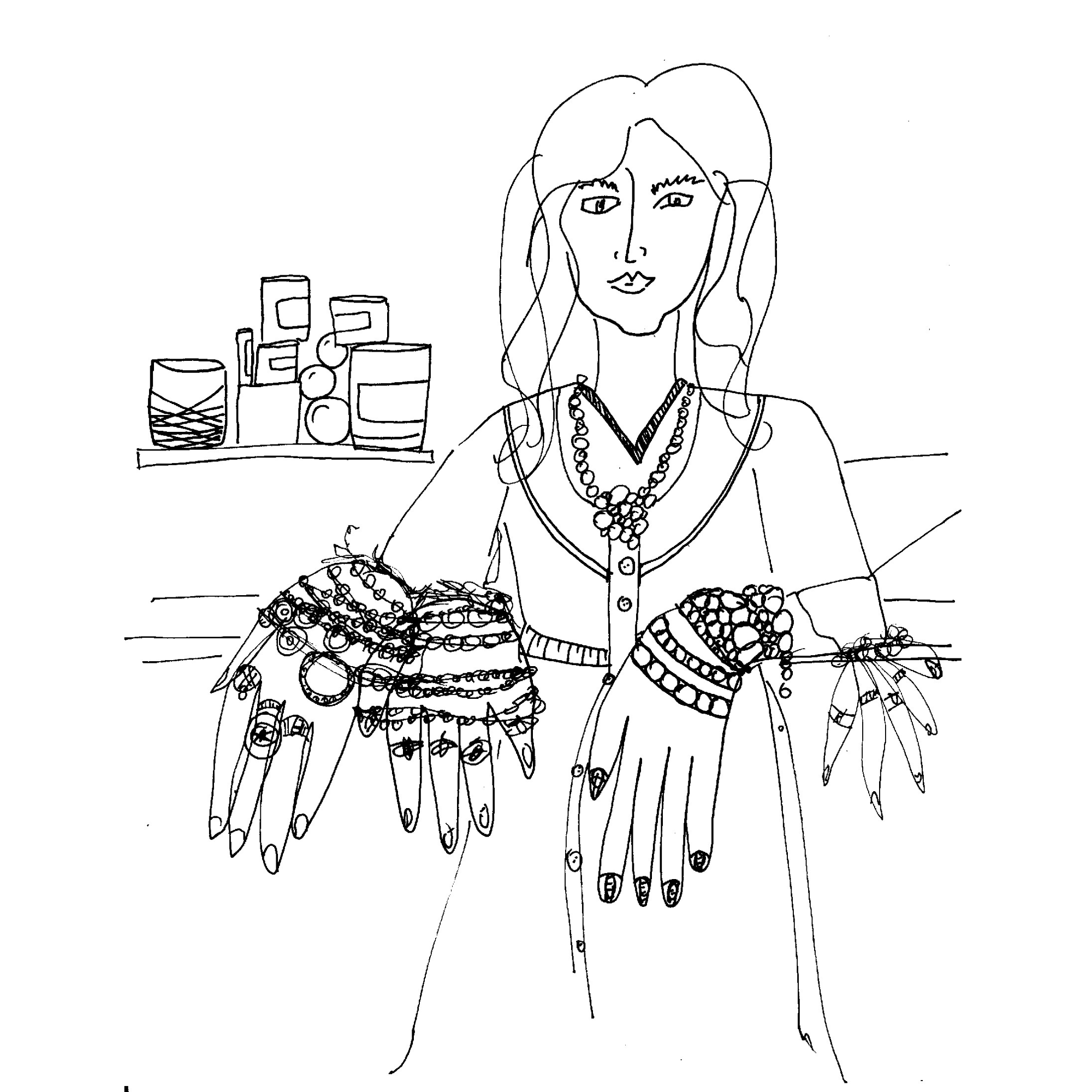
This is a story about attention. About permission. About noticing friction instead of smoothing it over. And, unexpectedly, about getting pulled back into my studio like gravity had been waiting patiently for me to remember it existed.
Somewhere along the way, the most meaningful thing that happened to my work with AI was that it pushed me deeper into my hands.
That became the through-line.
We started with a deceptively simple idea: intention before interface. Before opening a tool, pause. Ask what you’re bringing as a human. Ask what you’re actually ready to explore. Then put the work inside a time container. Set a timer. Notice what’s happening as it unfolds. Write while you’re in it, not later, not as performance, but as part of the thinking.
That small shift changed everything.
It made the work deliberate instead of incidental. It also made resistance visible. Slowing down enough to name intention meant I could no longer disguise avoidance as productivity.
When confusion or discomfort showed up, the invitation wasn’t to fix it immediately. It was to stay with it. Long enough to see what it was pointing toward.
That’s when I started tracking complaints.
Not big, dramatic ones. The quiet, habitual grumbles that surface when something feels inconvenient, unclear, or slow. I wrote them down without judgment. I treated them as data. Complaints, I realized, are often early signals of learning. They show up right at the edges of what we don’t yet know how to do.
Around that same time, I pulled out inks and watercolors and put them next to my notebook. At first, it felt like a minor choice. In hindsight, it was a turning point. I wanted slowness. I wanted texture. I wanted the kind of thinking that only happens when the hand is involved.
I’m trained as an artist. This wasn’t nostalgia. It was a dormant system coming back online.
As the weeks went on, my digital and physical practices began to speak to each other. I explored AI image generation not as a finished output, but as a way to spark ideas. I loaded years of my own artwork into mood boards, generated images that echoed my visual language, printed them, and brought them into the studio. From there, I drew, collaged, and made by hand. Then I scanned those pieces back into my digital work.
It wasn’t replacement. It was circulation.
That loop changed how I thought about authorship and credibility. When I stopped outsourcing my hand by default, the work didn’t become less professional. It became more grounded. When I used hand-made images in client-facing work for the first time, the response wasn’t hesitation. It was recognition.
This experience also reshaped how I think about community. Instead of abstract ideas about connection, I created a simple weekly ritual with a small group of friends. Three questions. Once a week. Wins, support, and one intention to revisit. That structure created coherence without pressure. It allowed work to be witnessed, not evaluated.
As the tools grew more capable, the need to stay awake inside them grew stronger. Ease, I was reminded, is not neutral. Systems that work well invite overuse. Grounding practices became a way to calibrate.
When I write with a pen, I can’t move faster than my thinking. When I draw, I have to sit with uncertainty. Those limits aren’t obstacles. They’re feedback. They show me what I actually understand versus what I can generate quickly.
The final week was about integration. Not neat synthesis, but coexistence. Holding my creative practice, my professional work, and my technical fluency in the same space without fragmenting myself. Integration showed up in decisions: what I included, what I stopped outsourcing, what I allowed to be visible.
And here’s the irony I keep returning to.
My relationship with AI led me back to my hands.
Not away from them.
Back to a way of working where attention is not optional. Where thinking slows down enough to feel true. That wasn’t the conclusion I set out to reach. It’s simply where the path led.
That has been the gift.
What I’m carrying forward isn’t a framework. It’s a practice. Timers as doorways. Complaints as signals. Hands as thinking partners. Community as structure. Screens and studios in conversation.
In a moment when many people feel unsettled, the most grounded thing I can offer isn’t an answer.
It’s a practice.
A human one.
A hand-made one.
A real one.
 Lab5 BLOG