Focus in Motion: A Practice for Seeing Your Work Worth

On November 1st, I made a decision that changed how I relate to my own labor.

I wasn’t looking for a better to-do list or a smarter app. I wanted a true reset. Not a cosmetic one, but a structural one. I needed to see what I was carrying and to stop pretending that all work is light, fast, or invisible once it’s done.

So I set aside a full weekend and did something very simple.

I externalized everything.
Step One: Get It Out of Your Head

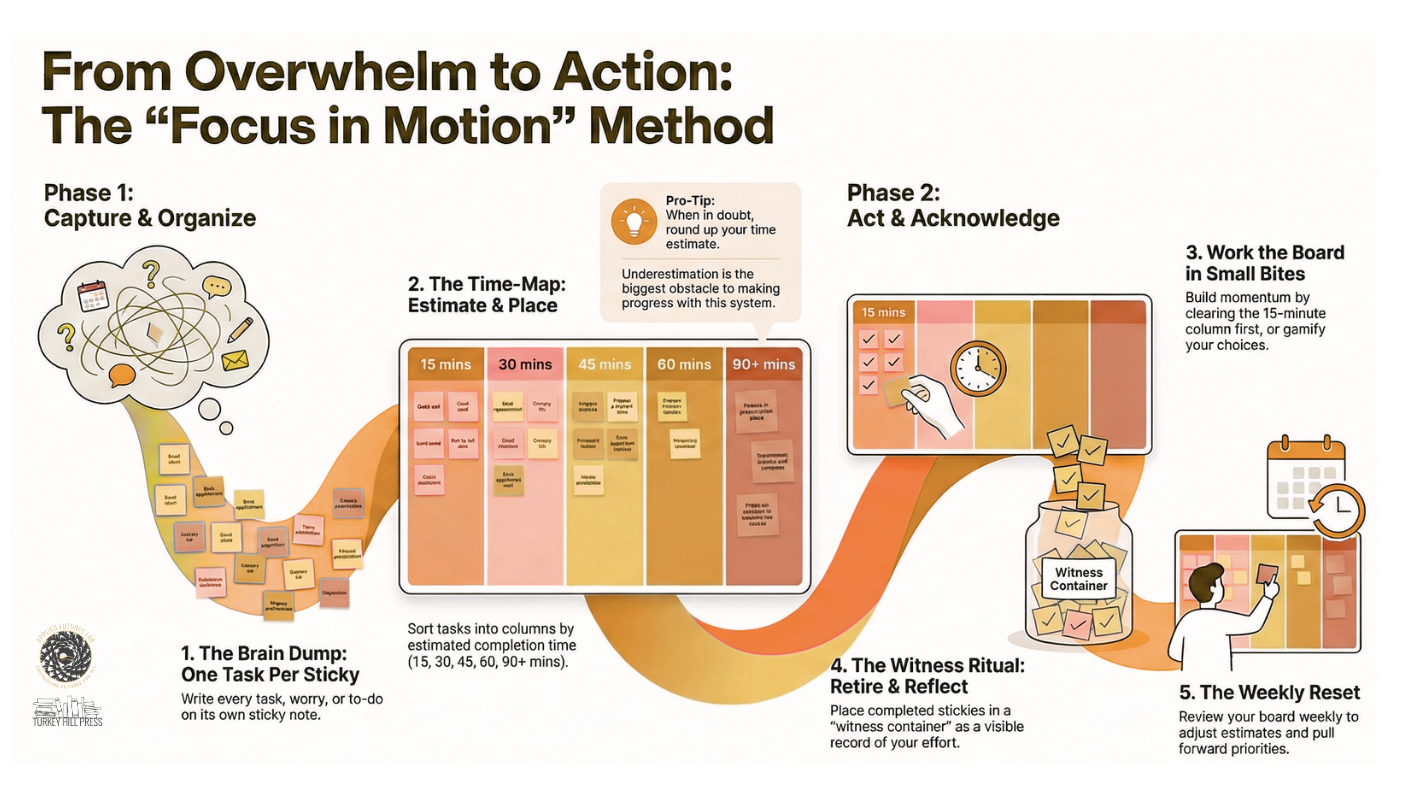
I started with one rule: one task per sticky note.

Every task I could think of went onto its own piece of paper. Not just work tasks, but home repairs, family logistics, year-end responsibilities, creative projects, community commitments, and the quiet maintenance tasks that keep life running.

If it lived in my head, it qualified.

The goal wasn’t organization yet. It was honesty. I kept going until my brain got bored, which turned out to be a reliable signal that I’d reached the bottom of the mental bucket.

Step Two: Map Time, Not Importance

Next, I drew vertical columns on my whiteboard and labeled them with real-world time estimates:

15, 30, 45, 60, and 90+ minutes.

Each sticky found a home based on how long the task actually takes, not how long I wished it would take. When I hesitated, I rounded up. Underestimation is where momentum goes to die.

This step changed everything. Suddenly, my workload wasn’t abstract. It was measurable. I could see where my time was going and why certain days felt heavier than others.

Step Three: Work in Small, Honest Bites

From there, I worked the board in small increments.

Some days I cleared the 15-minute column to build momentum. Other days I gamified the process by drawing a random time card and choosing a task from that column. The method didn’t care how I chose. What mattered was consistency.

This wasn’t about optimization. It was about alignment between energy, time, and reality.

Step Four: Witness the Work

Here’s the part that shifted my relationship with effort.

When I completed a task, I didn’t throw the sticky away.

I placed a small trash bucket on my desk and committed to dropping each finished sticky inside. I called it my witness container.

The bucket began to fill.

Each sticky became proof of attention spent, decisions made, and care applied. Not just productivity, but presence. The work didn’t disappear the moment it was done.

Step Five: Weekly Reset, Not Endless Push

Once a week, I stood at the board and adjusted.

Tasks that took longer than expected moved columns. Stickies that hid multiple steps got split. Priorities for the next seven days came forward.

Patterns became obvious. What I avoided. What drained me. What consistently required more time than I admitted.

The board became a feedback loop instead of a guilt machine.

Why This Worked

Motion became my work for staying focused.

Focus in Motion isn’t a productivity system. It’s a witnessing practice. It turns invisible work into physical artifacts. It replaces vague, overwhelming feelings with a navigable map. It honors effort without asking for hustle or self-judgment.

Most importantly, it restores a sense of agency over time. You don’t disappear into your work. You can see it, touch it, and account for it.

As the year wound down and the bucket filled, I was left with something rare: a grounded sense of what I’d actually done, not just what remains.

That clarity is the foundation for any true fresh start.
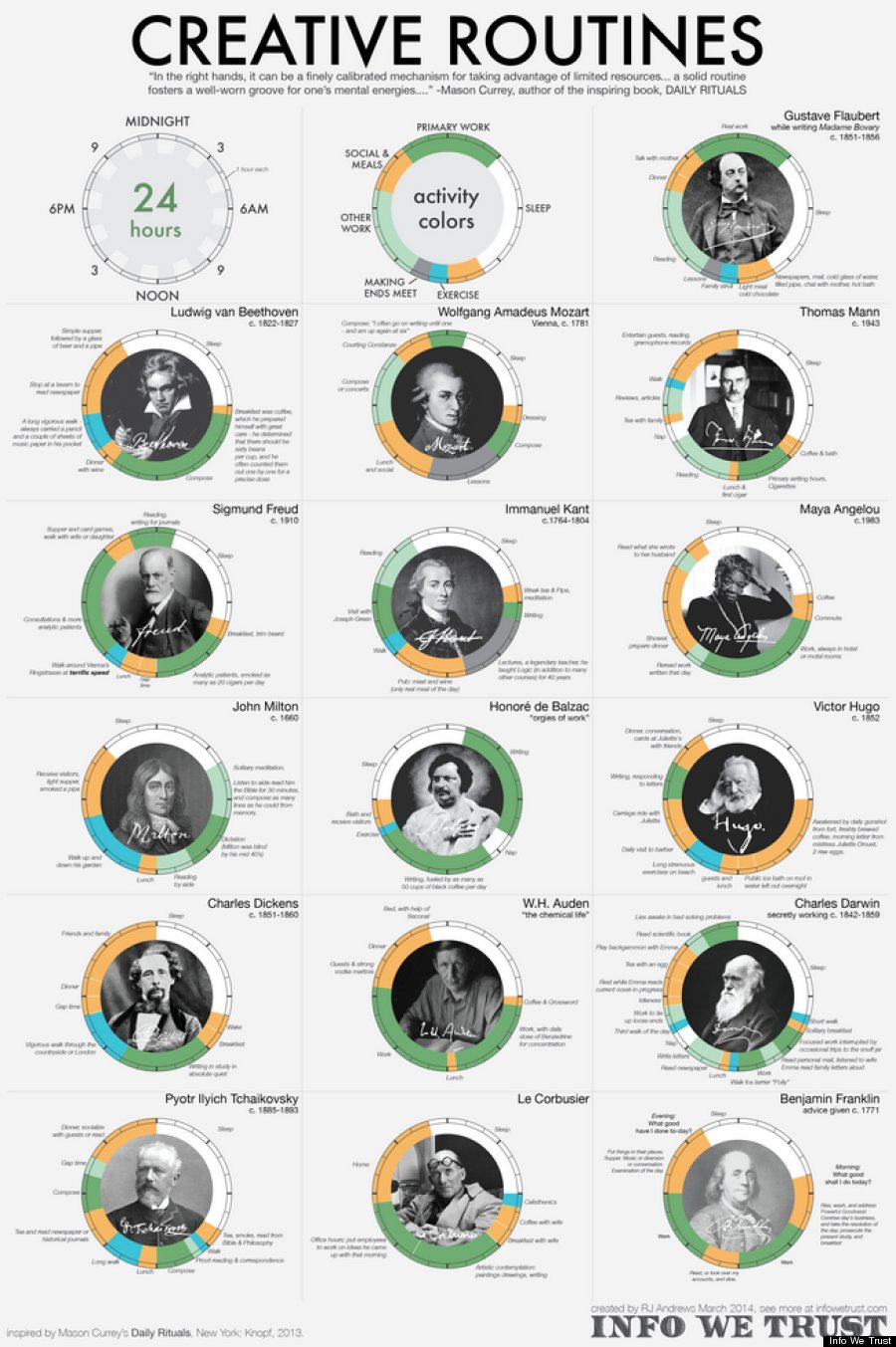
Daily Schedules of the World’s Most Brilliant People

o-CREATIVE-ROUTINES-EDIT-900

Huffington Post Article https://www.pinterest.com/pin/267190190365240472/

Laboratory5 Inc. is a small business based in Tempe, Arizona

Visit our website: Laboratory5       Follow us on Twitter: @lab5     Become a fan on Facebook: Laboratory5
Contact Us at anytime – we’d love to hear from you

Music & Productivity – Part 3 – Dr. James Gerber

Written by Amy DeCaussin
Director of Projects & Social Media

This is part three of a three part series on “Music & Productivity” – View Parts One & Part Two Here

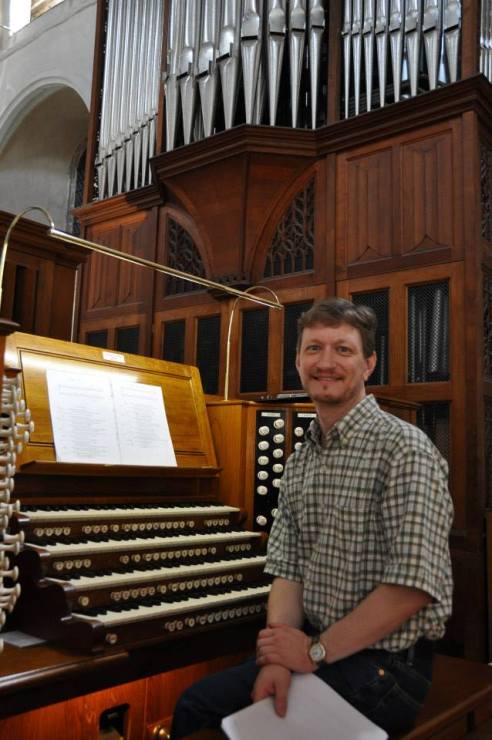
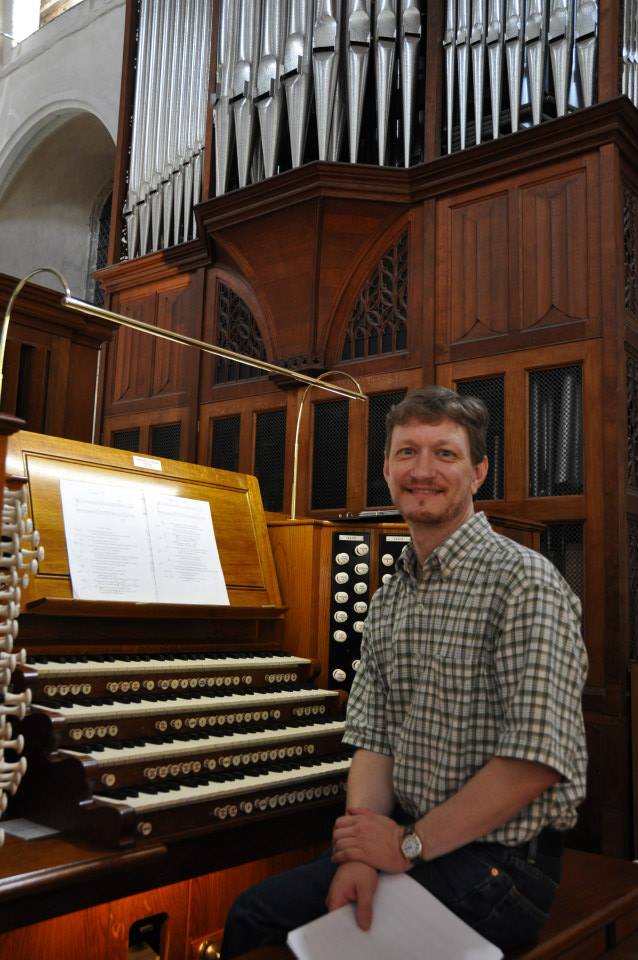
Dr James Gerber at the organ

Last week in Part 2 of Music & Productivity, we learned about Joey Salamon, an artist whose work is closely tied to music during its stages of production.  This week I was interested in discussing the subject of music and productivity from an expert in the field of music.  Dr. James Gerber is the Music Associate at All Saints’ Episcopal Church & Day School in Phoenix, a place that is very well known for its phenomenal music program.  I was not disappointed as I found Dr. Gerber to be incredibly insightful on the subject.  While listening to music is a wonderful experience, creating music is an amazing experience as well.

Above is “Herbert Howells: Salve Regina” performed by the All Saints’ Episcopal Church Choir

Formal education in music, such as private lessons requires a great deal of discipline.  The student must practice on a regular basis and repeat the musical phrases over and over in order to get the perfect sound.  As a result, many musicians become intense perfectionists.  “Musicians, as part of their practice process are continuing to work at things–they are never satisfied.” Explains Dr. Gerber.  Practice becomes a state of being.  There is always room for improvement.  The skills musicians acquire from their practice can be very beneficial to other parts of his or her life.  When applied to other fields of study, “They will be the ones that make the scientific discovery because they don’t give up.” Gerber says.

In addition to discipline, the practice of music can also give us experiences in other skills.  “Experience creates competence, which drives confidence, which creates resilience.” Mitzi Montoya, Vice President and Dean of Entrepreneurship & Innovation in Art at ASU said during her talk at the Girls in Tech Catalyst Conference this week in downtown Phoenix.  “It is both an emotional process and also an analytical process.  In western tradition is both a visual as well as an aural process.” explains Dr. Gerber.  You can work through your emotions through music, gain better analytical skills, learn new ways to visualize things and excel in the ability to listen on many levels.  Throughout most of history music was passed on through aural tradition.  It wasn’t until the medieval period when a system of notation was developed.  When you are able to write things down, they begin to take on a whole new level of meaning.  Music has enhanced the development of language.  “Music can transcend language barriers.  It is cross cultural.  You can express things through music that you can’t through spoken word.” says Dr. Gerber.

Above “Prelude, Fugue, and Variation by Cesar Franck” James Gerber on the Organ.

Music is also a physical experience, engaging the body.  Rhythms found in music are based on the natural rhythms of the body.  We usually have a natural physical response to what we hear.  Music can make us want to get up and dance, or help us through a long run.  It requires physical skills as well.  For example, the technique of playing the violin is a physical skill that takes time to develop–how to hold the bow, executing the finger patterns properly on the strings, how the violin is held and how the person playing the violin is sitting or standing is very important.  Beyond that, professional musicians are often called to produce music even if they aren’t in the mood.  They develop an ability to switch into performance mode.  No matter what is going on aside from the music, they learn to brush it aside and focus only on what’s in front of them.  These are all great skills that can be used in other areas of life, especially the work environment.  Music is a wonderful way to develop them.

Another wonderful experience musicians have is connecting with other people.  When they play in a group such as a band, an orchestra, or choir is they become a part of a community.  Just like a sports team, the musicians have to work together to create the sound.  They listen for each other and work collaboratively through their creation of song.

Above “Tomás Luis de Victoria:Nigra sum sed formosa.” All Saints’ Episcopal Church Chamber Choir

It is clear that whether listened to, studied, practiced or performed, the benefits of music on productivity are great.  If you haven’t experienced participating in the creation of music, you may want to consider it.  It is a great way to “cross train” your brain.

11143231_929127700442149_716439966327932441_o

You can check out the All Saints’ Chamber Choir at their concert “Music of Stars, Lights & Heaven” next Sunday, May 17th at 3pm.

Laboratory5 Inc. is a small business based in Tempe, Arizona

Visit our website: Laboratory5       Follow us on Twitter: @lab5     Become a fan on Facebook: Laboratory5
Contact Us at anytime – we’d love to hear from you