Why My AI Practice Brought Me Back to the Studio

For the last ten weeks, I was part of an experience that didn’t look like an experiment at first. It wasn’t framed as disruption or acceleration. It wasn’t about chasing the latest tool. It was a practice lab inside the Mastermind at AI Salon, led by Liz Miller-Gershfeld and Kyle Shannon, and it gathered people who had largely met through our shared work with generative systems.

On paper, this could sound like a story about AI.

It isn’t.
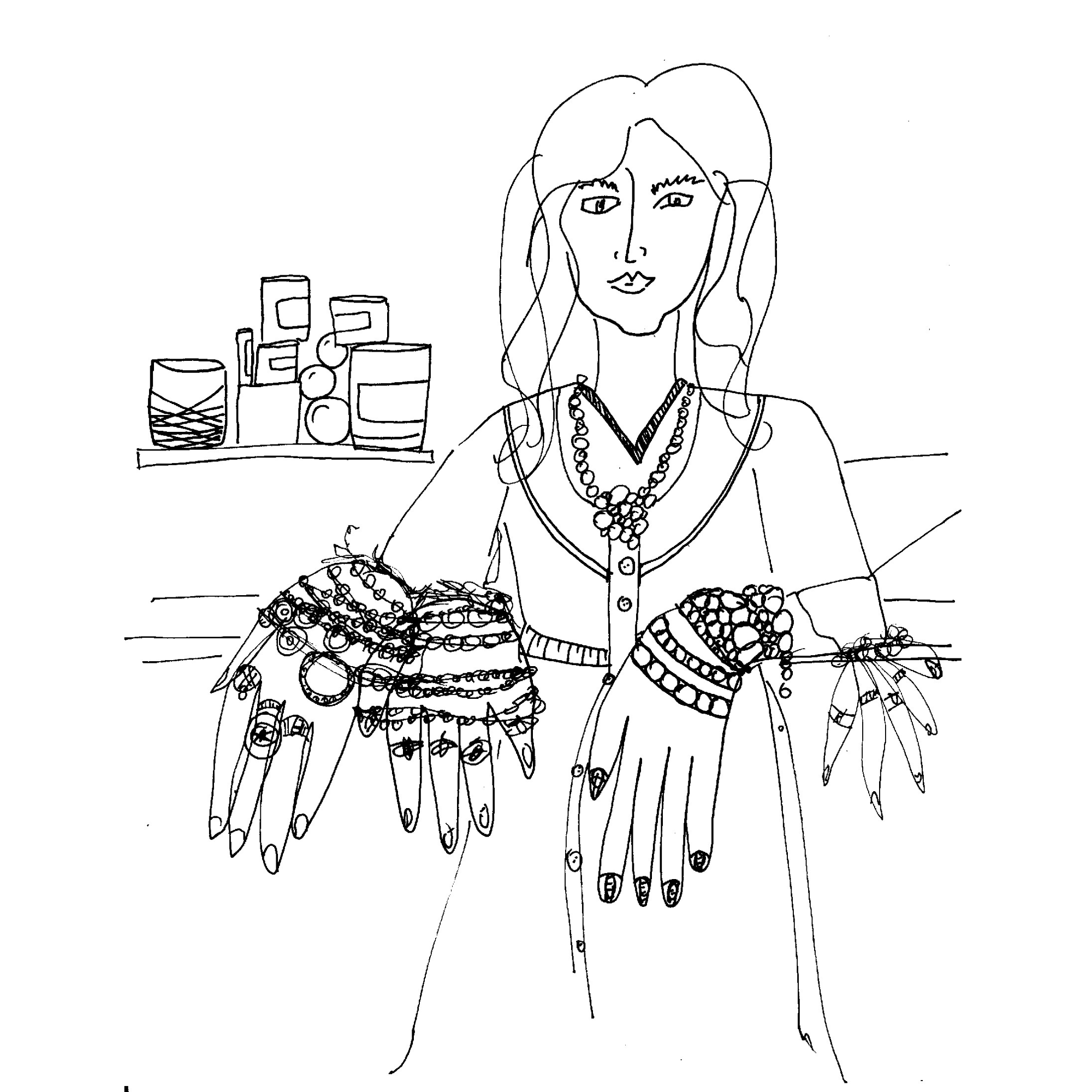
Black Ink Drawing by Cyndi Coon

This is a story about attention. About permission. About noticing friction instead of smoothing it over. And, unexpectedly, about getting pulled back into my studio like gravity had been waiting patiently for me to remember it existed.

Somewhere along the way, the most meaningful thing that happened to my work with AI was that it pushed me deeper into my hands.

That became the through-line.

We started with a deceptively simple idea: intention before interface. Before opening a tool, pause. Ask what you’re bringing as a human. Ask what you’re actually ready to explore. Then put the work inside a time container. Set a timer. Notice what’s happening as it unfolds. Write while you’re in it, not later, not as performance, but as part of the thinking.

That small shift changed everything.

It made the work deliberate instead of incidental. It also made resistance visible. Slowing down enough to name intention meant I could no longer disguise avoidance as productivity.

When confusion or discomfort showed up, the invitation wasn’t to fix it immediately. It was to stay with it. Long enough to see what it was pointing toward.

That’s when I started tracking complaints.

Not big, dramatic ones. The quiet, habitual grumbles that surface when something feels inconvenient, unclear, or slow. I wrote them down without judgment. I treated them as data. Complaints, I realized, are often early signals of learning. They show up right at the edges of what we don’t yet know how to do.

Around that same time, I pulled out inks and watercolors and put them next to my notebook. At first, it felt like a minor choice. In hindsight, it was a turning point. I wanted slowness. I wanted texture. I wanted the kind of thinking that only happens when the hand is involved.

I’m trained as an artist. This wasn’t nostalgia. It was a dormant system coming back online.

As the weeks went on, my digital and physical practices began to speak to each other. I explored AI image generation not as a finished output, but as a way to spark ideas. I loaded years of my own artwork into mood boards, generated images that echoed my visual language, printed them, and brought them into the studio. From there, I drew, collaged, and made by hand. Then I scanned those pieces back into my digital work.

It wasn’t replacement. It was circulation.

That loop changed how I thought about authorship and credibility. When I stopped outsourcing my hand by default, the work didn’t become less professional. It became more grounded. When I used hand-made images in client-facing work for the first time, the response wasn’t hesitation. It was recognition.

This experience also reshaped how I think about community. Instead of abstract ideas about connection, I created a simple weekly ritual with a small group of friends. Three questions. Once a week. Wins, support, and one intention to revisit. That structure created coherence without pressure. It allowed work to be witnessed, not evaluated.

As the tools grew more capable, the need to stay awake inside them grew stronger. Ease, I was reminded, is not neutral. Systems that work well invite overuse. Grounding practices became a way to calibrate.

When I write with a pen, I can’t move faster than my thinking. When I draw, I have to sit with uncertainty. Those limits aren’t obstacles. They’re feedback. They show me what I actually understand versus what I can generate quickly.

The final week was about integration. Not neat synthesis, but coexistence. Holding my creative practice, my professional work, and my technical fluency in the same space without fragmenting myself. Integration showed up in decisions: what I included, what I stopped outsourcing, what I allowed to be visible.

And here’s the irony I keep returning to.

My relationship with AI led me back to my hands.

Not away from them.

Back to a way of working where attention is not optional. Where thinking slows down enough to feel true. That wasn’t the conclusion I set out to reach. It’s simply where the path led.

That has been the gift.

What I’m carrying forward isn’t a framework. It’s a practice. Timers as doorways. Complaints as signals. Hands as thinking partners. Community as structure. Screens and studios in conversation.

In a moment when many people feel unsettled, the most grounded thing I can offer isn’t an answer.

It’s a practice.

A human one.

A hand-made one.

A real one.
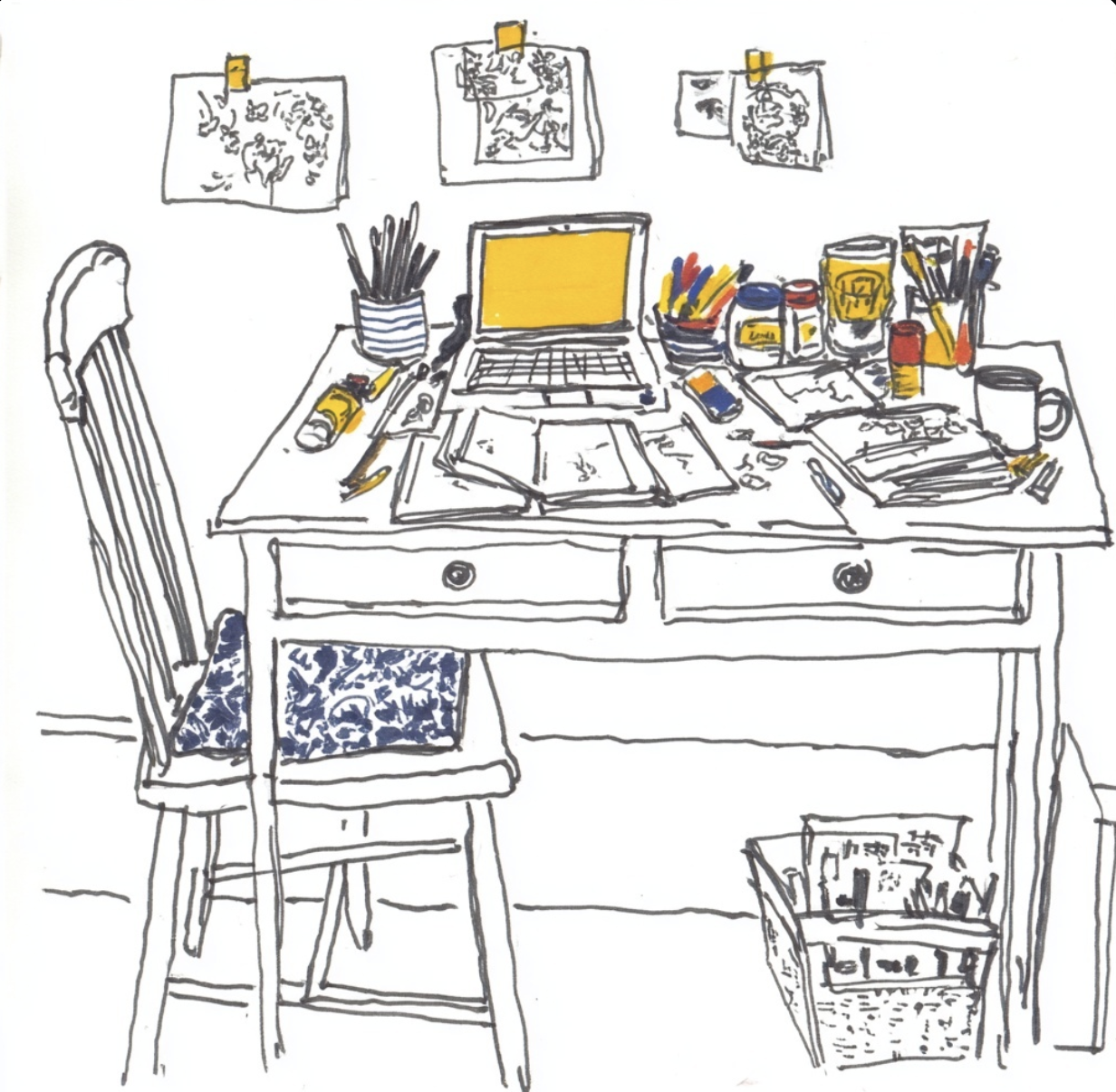
Why Hands Still Matter in an AI-Accelerated World

As generative AI becomes faster, more capable, and easier to rely on, creative work is quietly drifting away from the body. Ideas move from prompt to output with barely a pause, and the friction that once shaped judgment is treated as inefficiency.

This isn’t a crisis of tools. It’s a crisis of touch.

Creatives are being handed a false choice: embrace acceleration or stay grounded in material practice. But the work ahead isn’t choosing sides. It’s designing creative processes where AI and analog making are intentionally held in tension, with the hands playing a central role.

Because when creativity loses contact with the body, it loses its ability to care.

Hands Are Not a Nostalgia Act

Analog making is often framed as a sentimental return to the past. That framing misses the point entirely.

Hands-on practices are not about preservation. They are about perception.

When you sketch, write by hand, cut paper, or move objects around a table, your body becomes part of the thinking system. Resistance shows up. Fatigue appears. Mistakes surface. You slow down just enough to notice what doesn’t belong.

None of that is inefficiency. It’s information.

AI can generate options at scale, but it cannot feel the subtle signals that emerge through making: the hesitation before committing, the discomfort that signals misalignment, the satisfaction that tells you something has integrity.

Those signals live in the hands.

AI Expands Possibility. Hands Shape Meaning.

Generative AI is powerful precisely because it collapses time. It drafts, reorganizes, recombines, and proposes faster than any human can.

Used well, this is a gift. It opens creative space. It accelerates exploration. It helps us ask better “what if” questions.

But acceleration without embodiment is hollow.

In my own practice, AI is where possibility expands. Hands-on work is where meaning is shaped. I use AI to explore broadly, then step away from the screen to sort, edit, and decide using physical materials.

The sequence matters.

AI generates.
Hands select.
Judgment emerges in the space between.

Why Friction Is a Feature, Not a Flaw

Meaning doesn’t arrive fully formed. It appears through resistance.

The pause before a sentence resolves.
The moment when a sketch feels wrong.
The impulse to stop and rework something rather than push it through.

These moments disappear when creation becomes frictionless.

From a systems perspective, this isn’t a creative preference. It’s a feedback problem. When physical resistance is removed, we lose an entire layer of information. Discernment weakens. Care erodes.

Hands-on making restores those feedback loops.

Designing for Embodied Judgment

If AI is part of your creative process, design for embodiment on purpose.

Use AI generously in early exploration, but require that final decisions pass through a physical stage. Write the conclusion by hand. Lay concepts out as cards. Rearrange sketches on a table.

When reviewing AI outputs, notice your body. Tight shoulders. Wandering attention. Relief. Resistance. If something feels off, pause. That sensation is not noise. It’s signal.

And keep at least one analog practice non-negotiable. Drawing. Mapping. Longhand journaling. Anything that keeps your hands in conversation with your thinking.

That practice becomes your calibration tool.

The Work Ahead

Generative AI will continue to accelerate creative work. That isn’t the problem.

The risk is forgetting that judgment doesn’t live in prompts or outputs. It lives in bodies. In hands that know when to stop, revise, or walk away.

Human-centered futures won’t be built by faster generation alone. They will be shaped by people who still know how to make, feel misalignment, and choose deliberately.

Meaning isn’t generated.

It’s shaped.
Handled.
Tested.

And that work still begins with the hands.

The Futures AI Mindset: Thriving in a World of Generative AI

Artificial Intelligence (AI) is no longer a futuristic buzzword—it’s a transformative force already reshaping industries, creativity, and the way we solve problems. But as AI becomes increasingly integrated into our work and lives, the real question isn’t just how to use it, but how to think about it. Enter The Futures AI Mindset: a framework for approaching AI as a collaborator, not just a tool.

Image created in DALLE

What Is The Futures AI Mindset?

The Futures AI Mindset, developed by the Applied futures Lab, is a way of thinking that positions AI as a partner in creativity, problem-solving, and innovation. It helps individuals and teams navigate the complexities of emerging technologies while keeping humanity and ethics at the center. Instead of viewing AI as a replacement for human effort, The Futures AI Mindset emphasizes collaboration, balance, and forward-thinking.

This approach is grounded in eight key principles:

  1. Collaborative: AI thrives when combined with human creativity and intuition. Use AI tools to brainstorm, co-create, and enhance your work.
  2. Confident: Confidence grows with practice. The more you experiment with AI, the more you’ll trust its capabilities and your own.
  3. Positive: Focus on the opportunities AI brings rather than fearing disruption. Reframe challenges as chances for innovation.
  4. Prepared: Stay ahead of the curve by learning new tools and trends. AI is evolving rapidly, and preparedness is key.
  5. Balanced: Use AI to streamline repetitive tasks, creating space for creativity and personal well-being.
  6. Specific: Set clear, actionable goals for how you’ll integrate AI into your work.
  7. Open-Minded: Be curious and willing to explore new possibilities AI presents, even if they challenge your assumptions.
  8. Patient: Mastering AI tools and achieving meaningful results takes time. Celebrate small wins along the way.

Why The Futures AI Mindset Matters

Generative AI is already transforming industries—from healthcare to education, fashion to filmmaking. While these advancements bring incredible opportunities, they also create new challenges. The Futures AI Mindset helps us navigate this landscape with clarity and purpose.

  • Anticipate Change: AI can disrupt the status quo, but with the right mindset, we can turn disruptions into opportunities.
  • Think Systemically: AI’s impact isn’t isolated. For example, improving supply chains with AI also involves addressing workforce readiness and ethical considerations.
  • Innovate Boldly: Generative AI opens doors to bold experimentation, such as creating immersive virtual environments or designing entirely new product categories.

How to Apply The Futures AI Mindset

Applying The Futures AI Mindset starts with small, intentional actions. Here are a few steps to get started:

  • Stay Curious: Dedicate time to exploring AI tools like ChatGPT, MidJourney, or DALL-E. Experiment with how they can enhance your work.
  • Collaborate: Use AI to enhance team brainstorming sessions, blending diverse perspectives with machine-generated insights.
  • Reflect and Adapt: Regularly evaluate your AI strategies. What’s working? What needs refinement? Use feedback to improve your approach.
  • Engage in Learning: Attend workshops or join communities focused on AI. Programs like the Applied Futures Lab offer hands-on experience integrating AI with creative and strategic thinking.

Building Rafts Together

Not everyone is prepared for the speed and scale of AI transformation, and many feel like they’re drowning in a sea of uncertainty. That’s why The Futures AI Mindset isn’t just about personal growth—it’s about building rafts for others. By sharing our knowledge, creating accessible resources, and fostering inclusive discussions, we can ensure that no one is left behind. Helping others find their footing in the AI revolution is as important as navigating it ourselves.

The Takeaway

The Futures AI Mindset isn’t just about using technology—it’s about building a relationship with it. By embracing AI as a collaborator, we can unlock its full potential to enhance creativity, drive innovation, and shape meaningful solutions.

As we stand on the cusp of this AI-driven era, it’s up to us to ensure that the way we engage with AI reflects our values, creativity, and commitment to making a positive impact. So, how will you adopt The Futures AI Mindset in your work and life?