I am prepping for a talk I will be giving as part of a panel at the ISSST conference (International Symposium on Sustainable Systems and Technology) in May. I have been asked to give my perspective on the power of play to a room filled with open-minded Scientists and Engineers from academia and industry. I said yes instantly as this is the tribe that we at Laboratory5 live for!
I was sent this TED video as inspiration:
I am inspired! I am working on presenting my angle of creativity and play as innovation. I am excited so stay tuned for more.
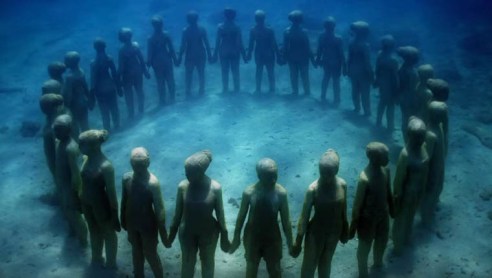
Sculptor Jason deCaires Taylor places his work underneath the ocean’s surface in locations all over the world. The exhibits are beautiful and provide a place for ocean life to thrive, but the advantages of his work expand beyond the tiny organisms growing on them.
Taylor’s sculpture park “Ocean Atlas” in the Bahamas drew attention to a nearby leak at an oil refinery. The pressure from the international news media influenced the government to allocate 10 million dollars towards cleanup. His park in Granada provided a reason for the government to create a designated area where marine life is protected. Entrance fees to the park fund park rangers who manage fishing quotas and tourism.
The underwater sculpture parks are called museums to help people view the ocean as sacred. When we hold something sacred, we cherish and protect it. A museum is a place of preservation, conservation and education. It becomes a designated point of interest where people can learn about the ocean and participate in its survival.
The work of Jason deCaires Taylor is the perfect combination of art and science that is playing a pivotal role in positive changes to the environment.
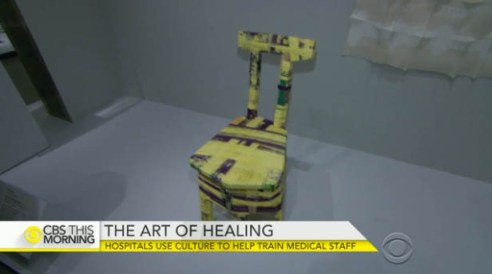
An innovative program at Boston’s Brigham and Women’s Hospital uses art to help physicians focus on the art of healing. (Click here to view the CBS video, Dr. Tara Narula reports.) Members of the integrated teaching unit (ITU) attend sessions at Boston Museum of Fine arts where they are learning to soften the hard science of medicine by strengthening interpersonal skills. The program is bringing humanities back into the healthcare curriculum, a core value that has been missing for the last 50 years.
The experience at the museum has a unique advantage above other types of activities such as attending a ball game, or having a staff party. Art takes everyone out of their comfort zone. Participants are asked to observe and talk about the artwork. Discussions promote collaboration and team building. As a result, they become better at communicating, problem solving, thinking outside of the box and appreciating different perspectives. These are all great skills that enhance the ability to diagnose as well as treat a patient. According to this CBS video segment, the program is showing great improvements in the care given at the hospital.
 Lab5 BLOG