get kids outdoors

This week at Laboratory5 Inc. are kicking off a summer long series inspired by our love of STEAM and nature. We will focus on all kinds of ways to get kids out of the house and off of their tech this summer. It can be hard for working parents to take kids out so we are going to give examples of quick walks, small container planting, and ‘gulp’ . . .  unsupervised play.

Want to get started with planning to keep you kids from getting Nature-Deficit Disorder this summer? Start here and read Richard Louv‘s book Last Child in the Woods: Saving Our Children From Nature-Deficit Disorder
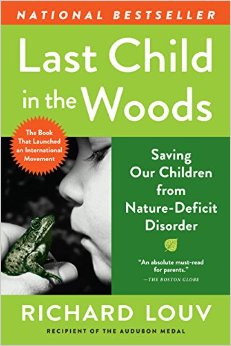
51zc+MjcDuL._SY344_BO1,204,203,200_

From the book:

“I like to play indoors better ’cause that’s where all the electrical outlets are,” reports a fourth-grader. Never before in history have children been so plugged in-and so out of touch with the natural world. In this groundbreaking new work, child advocacy expert Richard Louv directly links the lack of nature in the lives of today’s wired generation-he calls it nature deficit-to some of the most disturbing childhood trends, such as rises in obesity, Attention Deficit Disorder (Add), and depression. Some startling facts: By the 1990s the radius around the home where children were allowed to roam on their own had shrunk to a ninth of what it had been in 1970. Today, average eight-year-olds are better able to identify cartoon characters than native species, such as beetles and oak trees, in their own community. The rate at which doctors prescribe antidepressants to children has doubled in the last five years, and recent studies show that too much computer use spells trouble for the developing mind. Nature-deficit disorder is not a medical condition; it is a description of the human costs of alienation from nature. This alienation damages children and shapes adults, families, and communities. There are solutions, though, and they’re right in our own backyards. Last child in the Woods is the first book to bring together cutting-edge research showing that direct exposure to nature is essential for healthy childhood development-physical, emotional, and spiritual. What’s more, nature is a potent therapy for depression, obesity, and Add. Environment-based education dramatically improves standardized test scores and grade point averages and develops skills in problem solving, critical thinking, and decision making. Even creativity is stimulated by childhood experiences in nature.
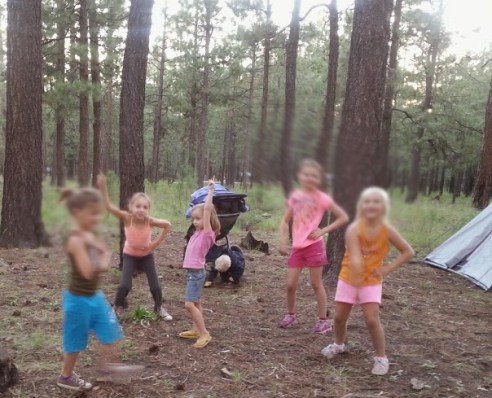
outdoor dance partyOutdoor Dance Party!

Let’s make this the summer of outdoor play and exploration. We need more scientists and engineers and artists who are inspired by nature. The Children and Nature Movement is forming  – Want to know more about how you can get involved? Click HERE

Laboratory5 Inc. is a small business based in Tempe, Arizona

Visit our website: Laboratory5       Follow us on Twitter: @lab5     Become a fan on Facebook: Laboratory5
Contact Us at anytime – we’d love to hear from you
Tales of Creativity and Play

I am prepping for a talk I will be giving as part of a panel at the ISSST conference (International Symposium on Sustainable Systems and Technology) in May.  I have been asked to give my perspective on the power of play to a room filled with open-minded Scientists and Engineers from academia and industry. I said yes instantly as this is the tribe that we at Laboratory5 live for!

I was sent this TED video as inspiration:

I am inspired! I am working on presenting my angle of creativity and play as innovation. I am excited so stay tuned for more.

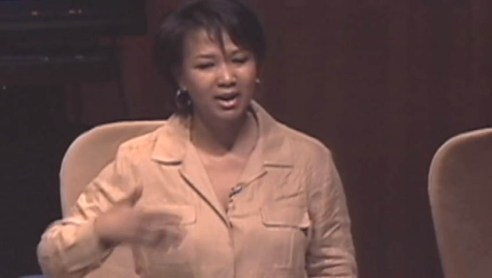
Teach Arts & Sciences Together – Astronaut Mae Jemison

In this video, Dr. Mae Jemison, physician and former NASA astronaut, talks about what is critical to a better future–and by future, she means, “In the year 2015, and the year 2020, 2025, the world our society is going to be building on, the basic knowledge and abstract ideas, the discoveries that we came up with today.”  This TED Talk was recorded in 2002, however her speech seems to resonate more than ever with what is currently going on in the world.  So listen up, all you societal contributors!  This message is important and should be applied today as we work to build our legacy for tomorrow.

The ideology that science and art are separate–this polarization, hinders the ability to create progress, experience and humanity for the future.  Dr. Jemison argues that they are “manifestations of the same thing.”  She goes on to say, “Science provides an understanding of universal experience and arts provides an understanding of a personal experience.  They are all part of us.”  Art is thought to be intuitive, and science is considered analytical.  Art is also analytical. According to Dr. Jemison, the ability to launch the shuttle is derived from the same place as choreographing a dance.  When choreographing a dance, upon hearing the music, one might first intuitively come up with an expressive movement.  The creation is then analyzed and refined to convey the right communication to the audience.  A scientist can think of an equation first, and then analyze it to see if it will work.

Why is it so important for everyone to understand that these two subjects coexist?  It effects how we think, how we learn, and how we create and contribute to society.  Dr. Jemison explains, “My personal issue for the future is really about integrating the intuitive and analytical.  The arts and scientists are not separate.  I like to think of ideas as potential energy.  They are really wonderful but nothing will happen without risking putting those ideas into action.  The three questions of greatest concern “is it attractive (intuitive), is it amusing (analytical) and does it know its place (balance)?”

Written by Amy DeCaussin

Director of Projects & Social Media

Laboratory5 Inc. is a small business based in Tempe, Arizona

Visit our website: Laboratory5       Follow us on Twitter: @lab5     Become a fan on Facebook: Laboratory5
Contact Us at anytime – we’d love to hear from you